Quick Answer: how do you store sugar in mylar bags? To store sugar in mylar bags, start with completely dry granulated sugar, pour it into a 5-mil or thicker mylar bag, add a 300cc oxygen absorber per gallon as optional protection, heat-seal the bag with a 2-inch clear margin, label it, and keep the sealed bags in a food-grade bucket in a cool, dark room. Sugar never truly spoils, and when you store sugar in mylar bags properly it stays free-flowing and pest-free for 30 years or longer.
Sugar is the easiest long-term staple to put away, yet most people still store it wrong. Left in a paper bag, sugar absorbs moisture, cakes into a solid brick, and attracts pantry pests. This guide walks you through the exact seven steps to store sugar in mylar bags, the equipment that matters, and the mistakes that ruin an otherwise perfect stockpile.
Here is the quick comparison before we start:
| Sugar type | Shelf life in mylar | Oxygen absorber | Watch out for |
|---|---|---|---|
| White granulated | 30+ years | Optional (300cc/gallon) | Moisture clumping |
| Powdered (confectioners) | 20+ years | Optional | Absorbs humidity fast |
| Brown sugar | 1-2 years soft | Skip – dries it out | Hardening without moisture |
| Sugar cubes | 30+ years | Optional | Crushing in transit |
In This Guide
- Why Sugar Is the Easiest Staple to Store
- What You Need Before You Start
- The 7 Best Steps to Store Sugar in Mylar Bags
- Do You Need Oxygen Absorbers for Sugar?
- White, Brown, and Powdered Sugar Compared
- 5 Mistakes That Ruin Stored Sugar
- FAQ
- The Bottom Line
Why Sugar Is the Easiest Staple to Store
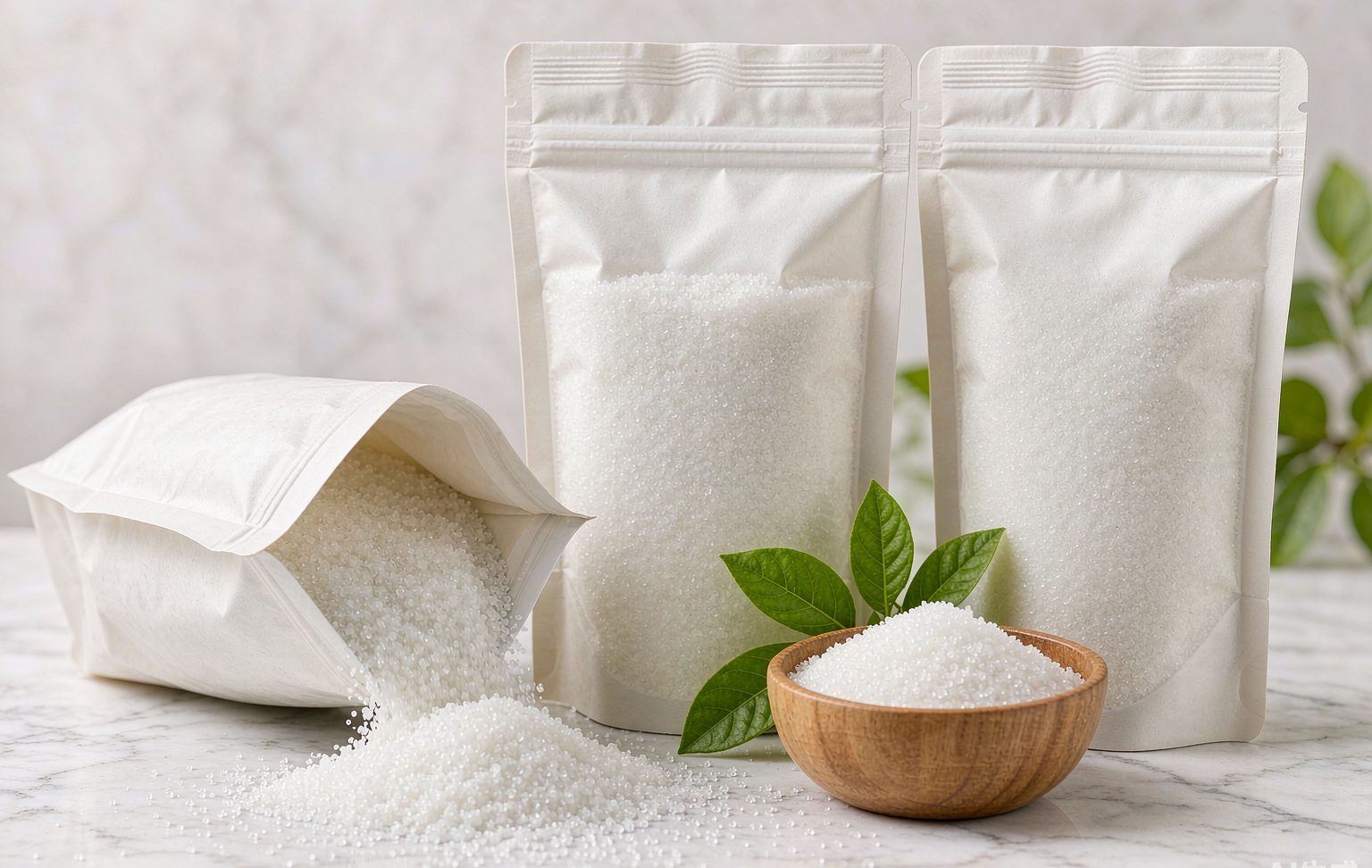
Unlike rice, flour, or oats, sugar does not support bacterial or mold growth at normal household humidity. Food scientists classify white sugar as a non-perishable: the sucrose molecule simply does not break down in any meaningful way at room temperature. That is why the question with sugar is never “will it spoil?” but “will it stay usable?” – and usability is exactly what mylar protects.
Three enemies attack stored sugar: moisture, pests, and odors. Moisture makes crystals fuse into hard clumps. Pantry moths and weevils tunnel straight through paper and thin plastic. And because sugar is hygroscopic, it soaks up the smell of anything stored nearby. A sealed mylar bag blocks all three at once, which is why the proven way to store sugar in mylar bags beats every other container. If you already store rice in mylar bags, adding sugar to the same rotation costs almost nothing extra.
How long can that rotation wait? Practically forever. Our deep dive on how long sugar lasts in mylar bags walks through the year-by-year quality picture; this guide covers the packing itself.
What You Need Before You Start
Gather these six items before you open the first sugar sack – the whole kit to store sugar in mylar bags costs less than one restaurant meal.
- Mylar bags, 5-mil or thicker. Thin 2-mil liners tear at the corners; check what mil thickness means first.
- Impulse heat sealer. A 12-inch sealer with a 3-5 mm seal width handles gallon bags in one press – see our review of the best heat sealer for mylar bags.
- Oxygen absorbers, 300cc (optional).
- Food-grade 5-gallon buckets with lids. Rodent-proof outer shell.
- Permanent marker. Mark contents and pack date on every bag.
- A clean filling station. Sugar grains in the seal area are the number one cause of failed seals.
The 7 Best Steps to Store Sugar in Mylar Bags
Step 1: Confirm the Sugar Is Bone Dry
Freshly opened sugar is nearly always dry enough, but sugar that has lived in an open bowl has already pulled moisture from the air. If crystals stick together loosely, spread the sugar on trays for 24 hours in a dry room until it flows freely again. Dry input is rule number one when you store sugar in mylar bags – packing damp sugar guarantees a solid block later.
Step 2: Choose the Right Bag Size
A 1-gallon mylar bag holds roughly 7-8 pounds of granulated sugar – a practical weight you can still lift with one hand. Larger 5-gallon bags hold about 35 pounds but become awkward to carry and re-seal if you open them. For a household stockpile, one-gallon portioning is the sweet spot. Match your bag choice to the oxygen absorber size per mylar bag so absorber power always matches headspace.
Step 3: Fill With a 2-Inch Head Margin
Pour sugar to within two inches of the bag top, then settle the bag by tapping it on the table twice. That margin is your sealing zone. Overfilled bags force sugar into the seal line, and even one crystal between the heating bars creates a pinhole channel that invites moisture years later. That clear margin is the single detail that separates people who store sugar in mylar bags successfully from those who find solid bricks next winter.
Step 4: Add the Oxygen Absorber (Optional)
Drop one 300cc absorber on top of the sugar and push it toward the center before sealing. It is optional for sugar – the next section explains why – but it costs almost nothing, and the slight contraction it creates is visible proof your plan to store sugar in mylar bags produced a genuinely airtight seal.
Step 5: Heat-Seal the Full Width
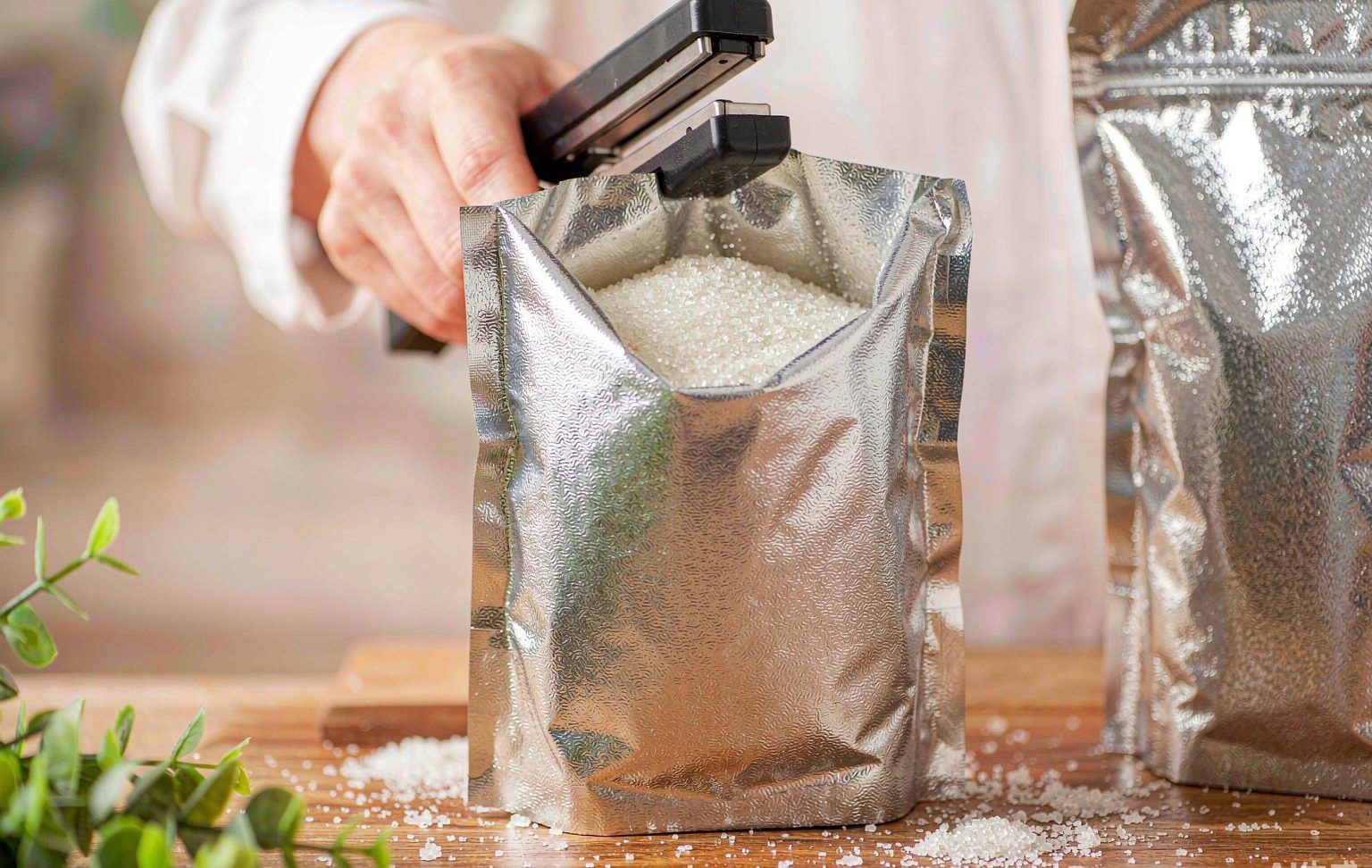
Press out the air with your palm, clamp the sealer across the full bag width at the top of the margin, and hold for the full cycle – usually 2-4 seconds on 5-mil material. Make a second parallel seal half an inch below the first as insurance. Wipe the seal area with a dry cloth first; a fingerprint of moisture weakens the fusion.
Step 6: Label With Contents and Pack Date
Write directly on the mylar with a permanent marker: contents, weight, and date. Sugar outlasts the memory of whoever packed it, and every undated bag in a pile of identical mylar looks the same in year eight – which is why dated labeling is part of how serious households store sugar in mylar bags.
Step 7: Bucket, Stack, and Store Cool and Dark
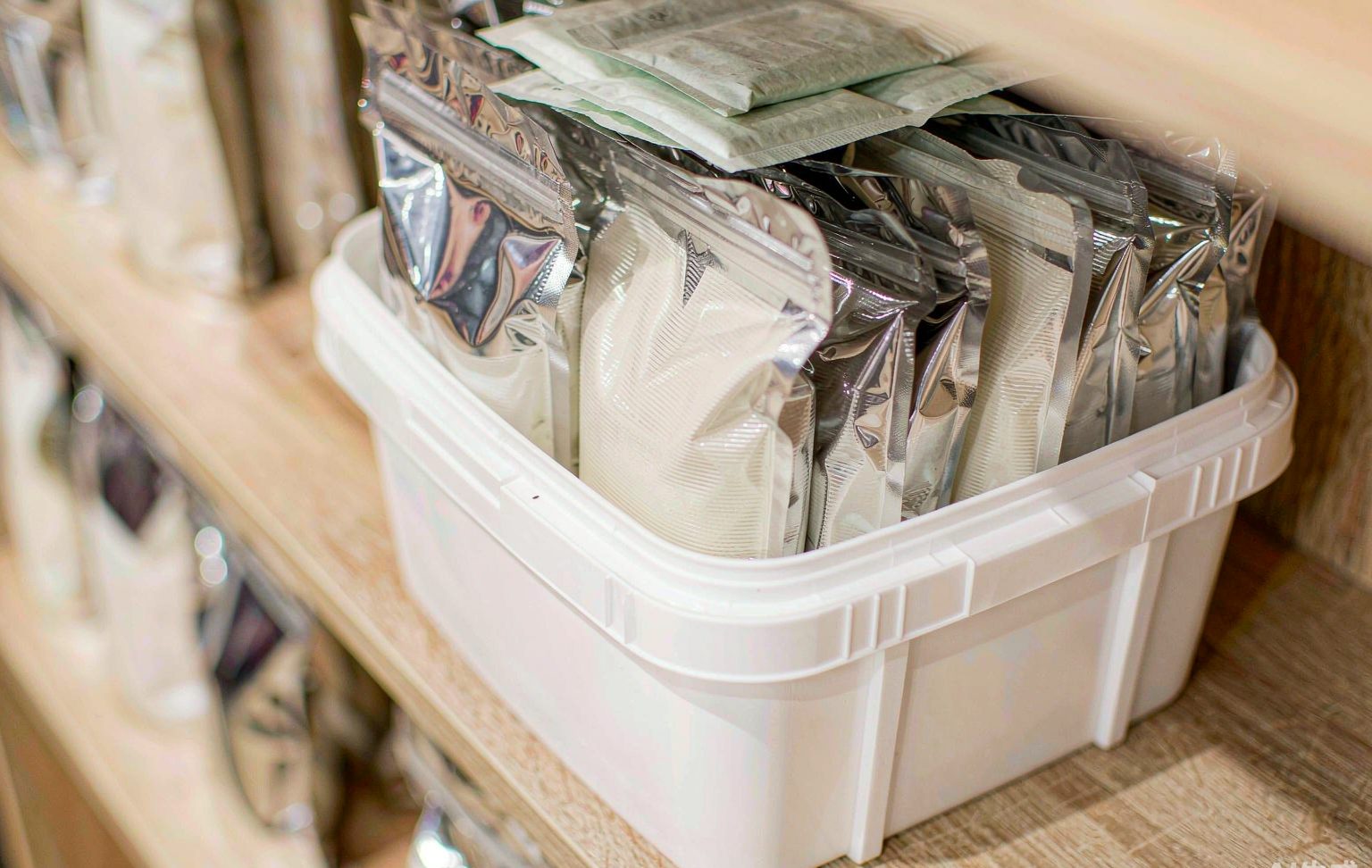
Place sealed bags upright in a food-grade bucket, snap the gamma lid, and store the bucket in the coolest, darkest space you have – a basement corner beats a garage loft. Ideal storage sits below 70°F with stable humidity. Light and heat do not spoil sugar, but they accelerate clumping and degrade the mylar itself over decades, so cool-and-dark is the rule whenever you store sugar in mylar bags for the long haul.
Do You Need Oxygen Absorbers for Sugar?
Short answer: no, but they do not hurt. Oxygen absorbers exist to stop oxidation in foods containing fats or oils and to kill off insect eggs in grains. Pure sucrose contains neither fat nor living matter, so there is nothing for an oxygen absorber to protect. Many long-term storage programs still add them when they store sugar in mylar bags, for two practical reasons: the slight vacuum pull confirms the seal is airtight, and any stray insect eggs that hitched a ride on the sugar are finished off in a low-oxygen headspace.
One important exception: never put an oxygen absorber in a bag of brown sugar. Brown sugar stays soft because of its residual moisture, and an absorber actively pulls that moisture out, turning the bag into brick within weeks. For brown sugar, seal without absorbers and plan to re-soften with a terracotta disk when you open it.
White, Brown, and Powdered Sugar Compared
All sugars are not equal in a mylar program, and the type decides how you should store sugar in mylar bags. White granulated sugar is the benchmark: it packs dense, seals clean, and survives decades unchanged. Powdered sugar contains about 3% added starch, which makes it drink up ambient humidity, so it demands the driest sealing environment of the three. Brown sugar is the odd one out – its softness depends on moisture that long-term sealing removes, so treat it as a rotating pantry item rather than a decades-long reserve, or store it in its own smaller mylar bags and accept 1-2 years of peak softness.
If you bake from your storage, note that powdered sugar and powdered milk in mylar bags follow almost identical packing rules, so the same sealing session can cover both.
5 Mistakes That Ruin Stored Sugar
- Sealing over sugar crystals. A single grain across the seal line becomes a slow leak. Wipe and inspect before every press.
- Using thin 2-mil liner bags. They puncture on bucket edges within months. Five mil is the minimum; see our 5-mil vs 7-mil mylar bag comparison for when the upgrade pays off.
- Skipping the bucket. Mylar resists rodents but is not invincible against determined mice with years of access. Buckets are cheap insurance for everyone who stores sugar in mylar bags in a garage or shed.
- Storing against an exterior wall. Temperature swings cycle moisture through micro-leaks. Leave a gap from concrete walls.
- Reusing opened bags without re-trimming. Cut above the old seal line and make a fresh seal; doubled seals trap sugar dust that wicks moisture.
FAQ
How long does sugar last in mylar bags?
Indefinitely in the safety sense – sugar does not spoil. Stored dry in properly sealed 5-mil mylar inside a bucket, white granulated sugar keeps its texture and purity for 30 years or more. Hardened clumps that appear after decades re-pulverize in a blender with no loss of quality, which is why the effort to store sugar in mylar bags pays off for decades.
Can I store sugar in mylar bags without oxygen absorbers?
Yes. Oxygen absorbers add no shelf life to pure sugar because sucrose cannot oxidize in any way that matters. They remain a cheap belt-and-suspenders measure against stray insect eggs and give you a visual seal check, but a clean, dry, well-sealed bag is what actually protects the sugar.
What size mylar bag is best for sugar?
A 1-gallon bag holding 7-8 pounds is the best balance of portion control and handling weight. Use 5-gallon bags only if you rotate through large volumes, such as for a bakery or a community pantry.
Do I need to rotate stored sugar?
No rotation is required for white sugar packed this way. First-in-first-out applies only to brown sugar and other moisture-dependent sugars, where softness – not safety – declines within a couple of years.
Can I vacuum-seal sugar instead of using mylar?
Food vacuum canisters work, but their plastic bags are clear and thin, letting light through, and their seals fail over years. Mylar’s foil layer blocks light completely and heat-seals far more reliably, which is why mylar remains the standard for decades-long storage.
The Bottom Line
To store sugar in mylar bags successfully, remember the four things that actually matter: the sugar goes in dry, the bag is 5-mil or thicker, the seal sits on a clean 2-inch margin, and the finished bags live in a bucket in a cool, dark spot. Do those four things and your sugar will outlast nearly every other item on your shelf – still white, still free-flowing, still ready the day you need it. Start with one gallon bag as a test run this weekend; the whole packing session takes about twenty minutes.