Quick Answer: how do you store oatmeal in mylar bags? To store oatmeal in mylar bags, choose rolled or steel-cut oats with low moisture, pack them into 5-mil or thicker mylar bags with one 300cc oxygen absorber per gallon, heat-seal a clean 2-inch margin, and keep the bags in a food-grade bucket in a cool, dark room. Packaged this way, oatmeal keeps its nutrition and baking quality for 30 years.
Oatmeal is one of the cheapest calories you can bank, yet it goes stale or rancid surprisingly fast in its original paper canister. The fix is simple: seal the oats away from oxygen, moisture, light, and pests all at once. This guide gives you the seven tested steps to store oatmeal in mylar bags, the absorber sizes that matter, and the oat-type choices that separate a 5-year pantry from a 30-year one.
The short version by oat type:
| Oat type | Shelf life in mylar | Oxygen absorber per gallon | Best use |
|---|---|---|---|
| Rolled oats (old-fashioned) | Up to 30 years | 300cc | Porridge, baking |
| Steel-cut oats | 25-30 years | 300cc | Hearty porridge |
| Quick oats | 15-20 years | 300cc | Fast breakfast |
| Instant flavored packets | 2-5 years | Not recommended | Rotate in pantry |
In This Guide
- Why Mylar Beats the Original Container
- Choosing Oats That Store Well
- The 7 Best Steps to Store Oatmeal in Mylar Bags
- Oxygen Absorbers: Size, Count, and Timing
- How Long Oatmeal Lasts in Mylar
- 5 Mistakes to Avoid
- FAQ
- The Bottom Line
Why Mylar Beats the Original Container
That paper canister or cardboard tube oats come in is a pantry package, not a storage package. It passes light, breathes air, and tears easily – three ways oatmeal loses quality. Oatmeal contains natural oils in the germ, and those oils oxidize when oxygen reaches them, producing the cardboard-stale flavor bakers dread. Moths and weevils chew straight through paper and thin plastic to reach the grain.
A foil-layer mylar bag stops all four threats at once: it is a true light barrier, a moisture barrier, and – once heat-sealed with an oxygen absorber inside – removes the oxygen that both oxidation and insect life cycles depend on. That four-in-one protection is why learning to store oatmeal in mylar bags pays off more than any pantry upgrade. Households that already pack rice in mylar bags can run oatmeal through the same session with zero new equipment.
Choosing Oats That Store Well
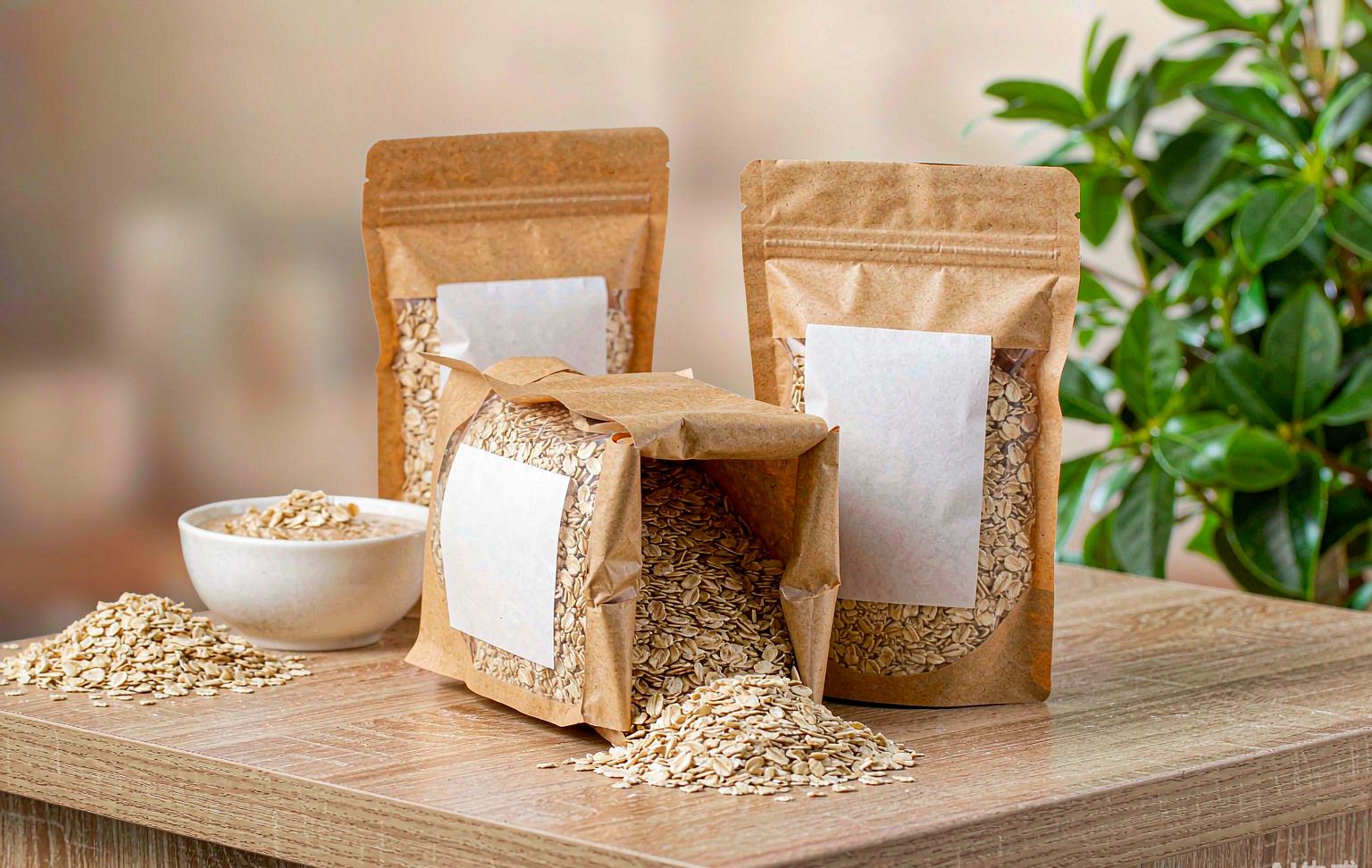
Not every oat belongs in a long-term bag. Rolled oats and steel-cut oats are steamed and dried at the mill, arriving at roughly 8-10% moisture – low enough for decades of stability. Quick oats store nearly as well; they are just cut thinner, so they soften faster over the years. What fails in storage is the instant flavored variety: the dried fruit, sugar coatings, and flavor sachets all carry moisture and fats that go stale long before the oats themselves do.
Buy oats in the plainest form available – bulk rolled oats from a food-service supplier or a sealed #10 can are ideal starting points. Check the bag date; oats less than a year from milling give you the full quality runway, and fresh input is the cheapest way to guarantee the result when you store oatmeal in mylar bags.
The 7 Best Steps to Store Oatmeal in Mylar Bags
Step 1: Verify the Oats Are Dry and Fresh
Squeeze a handful: it should flow and feel dry, not dusty-damp. If the oats came from an open sack, dry them on trays for a day before packing. Moisture above about 12% is the single biggest cause of spoilage inside an otherwise perfect bag.
Step 2: Pick Bag Sizes You Can Actually Use
A 1-gallon mylar bag holds about 5 pounds of rolled oats – one to two months of breakfast for a family, and a bag you can open and finish while it stays fresh. Reserve 5-gallon bags for bulk reserves you will not touch for years. Portion sizing is also what keeps the oxygen absorber math per mylar bag simple: one 300cc absorber per gallon bag, every time.
Step 3: Fill With Headroom and Settle
Pour oats to two inches below the top edge, then tap the bag flat on the table to settle the grain. Flakes trap more air than sugar or rice, so press the bag gently flat before sealing to cut the headspace your absorber has to work through – extra headspace is the main reason some people who store oatmeal in mylar bags see slow seal failure later.
Step 4: Add the Oxygen Absorber on Top
Drop a 300cc absorber on top of the oats and center it. Work fast: once a packet is exposed to air it starts consuming, so open the absorber package only for the bags you are sealing in the next ten minutes.
Step 5: Heat-Seal the Full Bag Width
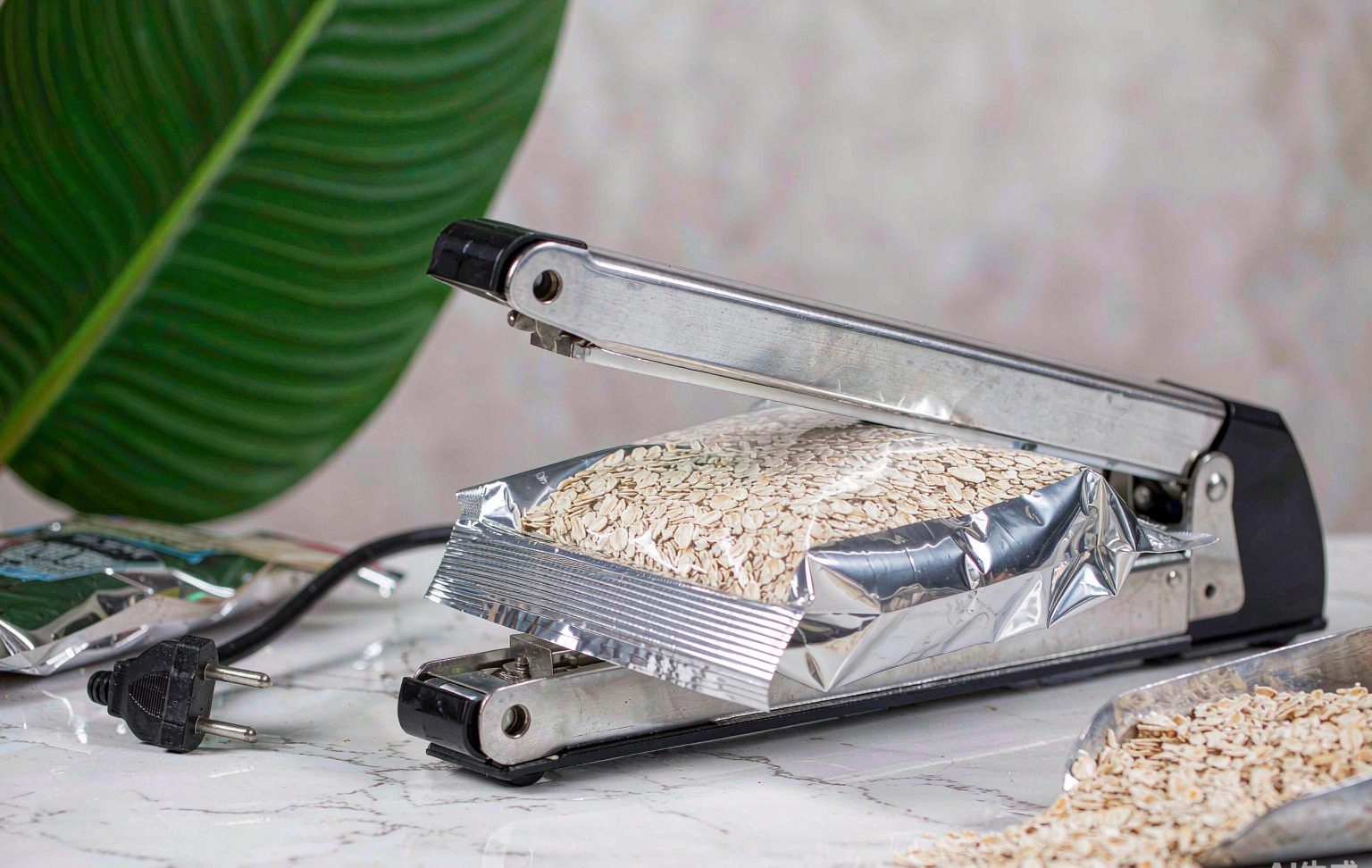
Squeeze residual air out, wipe the seal zone dry, and press the impulse sealer across the full width for 2-4 seconds on 5-mil material. Add a second parallel seal half an inch lower as insurance against a pinhole. If you have never sealed before, our guide to the best heat sealer for mylar bags shows the settings and dwell times that produce a full fusion weld – the last hands-on skill you need to store oatmeal in mylar bags properly.
Step 6: Label Contents, Weight, and Date
Mark every bag in permanent marker. Oats from different mills age differently, and the date is the only way to rotate intelligently in year five.
Step 7: Bucket Up and Store Cool and Dark
Stand the sealed bags in a food-grade bucket, snap the lid, and store below 70°F away from light. A basement shelf beats a hot attic every time; heat ages oats faster than anything else you can control, so cool and dark is non-negotiable when you store oatmeal in mylar bags for decades.
Oxygen Absorbers: Size, Count, and Timing
For oatmeal the standard is one 300cc absorber per gallon bag, or four 300cc units per 5-gallon bag. Oats are less dense than wheat, so the trapped air volume is higher – err on the side of one extra absorber rather than one short. Timing matters as much as size: an opened absorber packet spends its capacity in hours, so portion out what you need and re-seal the master packet in a small jar within minutes of opening.
If you are unsure whether your stock needs them at all, remember what the oxygen absorber actually does: it starves insect eggs of the oxygen they need to hatch and halts oil oxidation. Both functions matter for oats because of their natural germ oils – this is one staple where absorbers are genuinely required, unlike pure salt or sugar. Anyone who skips the absorber and still expects to store oatmeal in mylar bags for 30 years is gambling with rancidity.
How Long Oatmeal Lasts in Mylar
Long-term food storage authorities rate properly packaged low-moisture rolled oats at up to 30 years for nutrition, with best cooking quality concentrated in the first 10-15 years. Steel-cut oats hold nearly as long thanks to their lower surface area. Quick oats begin losing texture around year 15. If you want the full picture of how quality declines – and what “still good” tastes like in year 20 – see our deep dive on how long oatmeal lasts in mylar bags. The short version: when you store oatmeal in mylar bags with an absorber, the calendar barely matters.
5 Mistakes to Avoid
- Packing flavored instant oatmeal. The add-ins carry the moisture and oils that go stale first. Store plain oats and flavor them fresh.
- Skipping the absorber. Unlike sugar, oats need low oxygen. A bag sealed without one goes rancid-toned within a few years.
- Using 2-mil thin bags. Flake edges and shelf corners puncture thin film. Five mil is the floor; our 5-mil vs 7-mil thickness guide explains when 7-mil earns its cost.
- Sealing over loose flakes. Oats in the seal line leak invisibly. Brush the margin clean before every press – the same rule that governs how you store oatmeal in mylar bags versus denser grains.
- Storing bags loose on a shelf. Without the bucket, one curious mouse undoes a whole afternoon of packing.
FAQ
How long does oatmeal last in mylar bags?
With a 300cc oxygen absorber per gallon bag, a full heat seal, and cool dark storage, rolled oats are rated up to 30 years for nutrition; cooking quality peaks in the first 10-15 years. That is the reward for taking the time to store oatmeal in mylar bags instead of leaving them in the cardboard canister.
Do oats need oxygen absorbers in mylar bags?
Yes. Oats carry natural oils in the germ that oxidize, and stray insect eggs survive in ordinary air. A 300cc absorber per gallon handles both problems and is the reason mylar-packed oats outlast vacuum-canister storage.
Can I store cooked oatmeal in mylar bags?
No. Mylar long-term storage is for dry grain only. Cooked oatmeal is moist enough to support bacterial growth and must be refrigerated or frozen; can it at home only with pressure-canning equipment and tested recipes.
What size oxygen absorber for a 5-gallon bag of oats?
Use four 300cc absorbers, or one 2000cc unit, per 5-gallon bag. Oats trap more air than dense grains, so matching absorber capacity to the larger headspace matters. This sizing rule applies whether you store oatmeal in mylar bags by the gallon or by the bucket.
Is it cheaper to buy oats in bulk and pack them myself?
Almost always. Bulk rolled oats plus mylar bags and absorbers cost a fraction per pound compared with retail cans, and you control the portion sizes. The packing session for a month of breakfasts takes under an hour.
The Bottom Line
To store oatmeal in mylar bags the right way, buy plain rolled or steel-cut oats, pack them dry into 5-mil bags with a 300cc oxygen absorber each, seal on a clean margin, and bucket them in a cool dark room. The entire process is beginner-friendly, costs pennies per serving, and turns one of the cheapest groceries into one of the most durable. If your shelf already holds rice and salt in mylar, oatmeal is the natural third staple – pack it this weekend and breakfast is secured for a generation.