Quick Answer: To store rice in mylar bags, fill a food-grade mylar pouch with white rice, add one correctly sized oxygen absorber (100cc per quart, up to 3000cc for a 5-gallon line), seal the top with a heat impulse sealer, and keep the bag cool and dark below 70°F (21°C). Done right, knowing how to store rice in mylar bags gives white rice a realistic shelf life of 20 to 30 years, while brown rice stays best within 1 to 2 years because of its natural oils.
| Step | Action | Key Detail |
|---|---|---|
| 1 | Choose the bag | 5 mil or thicker food-grade mylar |
| 2 | Fill | Leave 3–4 inches of headspace |
| 3 | Add oxygen absorber | 100cc per quart, 2000–3000cc per 5-gallon line |
| 4 | Seal | Heat sealer, 2–3 second impulse, one flat weld |
| 5 | Label and store | Date the bag, keep below 70°F and out of light |
Learning how to store rice in mylar bags matters because the difference between a bag done right and one done wrong is measured in decades, not months. This guide walks through the exact steps, the oxygen absorber math, and the mistakes that quietly ruin stored rice.

In This Guide
- Why Mylar Works for Rice
- Step 1: Choose the Right Bag Thickness
- Step 2: Fill and Add Oxygen Absorbers
- Step 3: Seal the Bag Correctly
- Step 4: Storage Conditions That Protect Rice
- White Rice vs Brown Rice Shelf Life
- 5 Mistakes That Ruin Stored Rice
- FAQ
- The Bottom Line
Why Mylar Works for Rice
Rice fails in storage for three reasons: oxygen, moisture, and light. Mylar is metallized PET film laminated to a polyethylene liner, and it blocks all three far better than plastic buckets or vacuum freezer bags. A quality mylar bag has an oxygen transmission rate near zero.
When people ask how to store rice in mylar bags, the honest answer starts with the material itself. A thin sandwich bag lets oxygen creep back in within weeks. A 5 mil or 7 mil mylar bag with a proper seal holds the near-vacuum created by the oxygen absorber for years, keeping the rice inert and safe. That barrier is the entire reason how to store rice in mylar bags outperforms every other home container.
Step 1: Choose the Right Bag Thickness
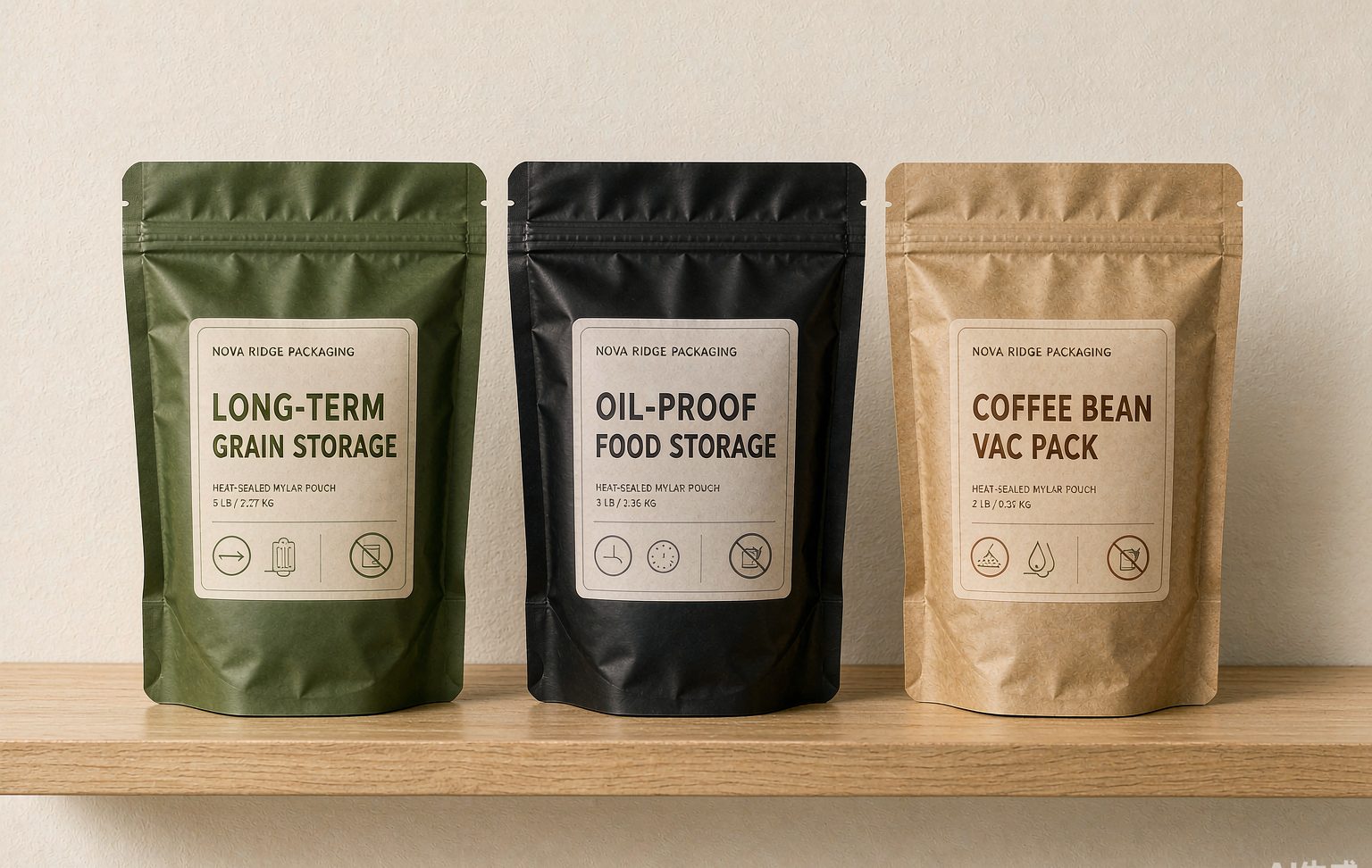
Bag thickness is the first real decision in how to store rice in mylar bags, measured in mils. For rice storage, 5 mil is the practical minimum and 7 mil is the gold standard for buckets or anything stored longer than 10 years; see our full explainer on what mil thickness means. Thinner 3.5 mil bags work for short-term portions but pinhole easily against rough shelving.
Any guide on how to store rice in mylar bags should also mention food grade lining. The inner poly layer must be rated for food contact, because rice sits directly against it for years. If a supplier does not state food-grade compliance, assume it is not food safe.
Step 2: Fill and Add Oxygen Absorbers
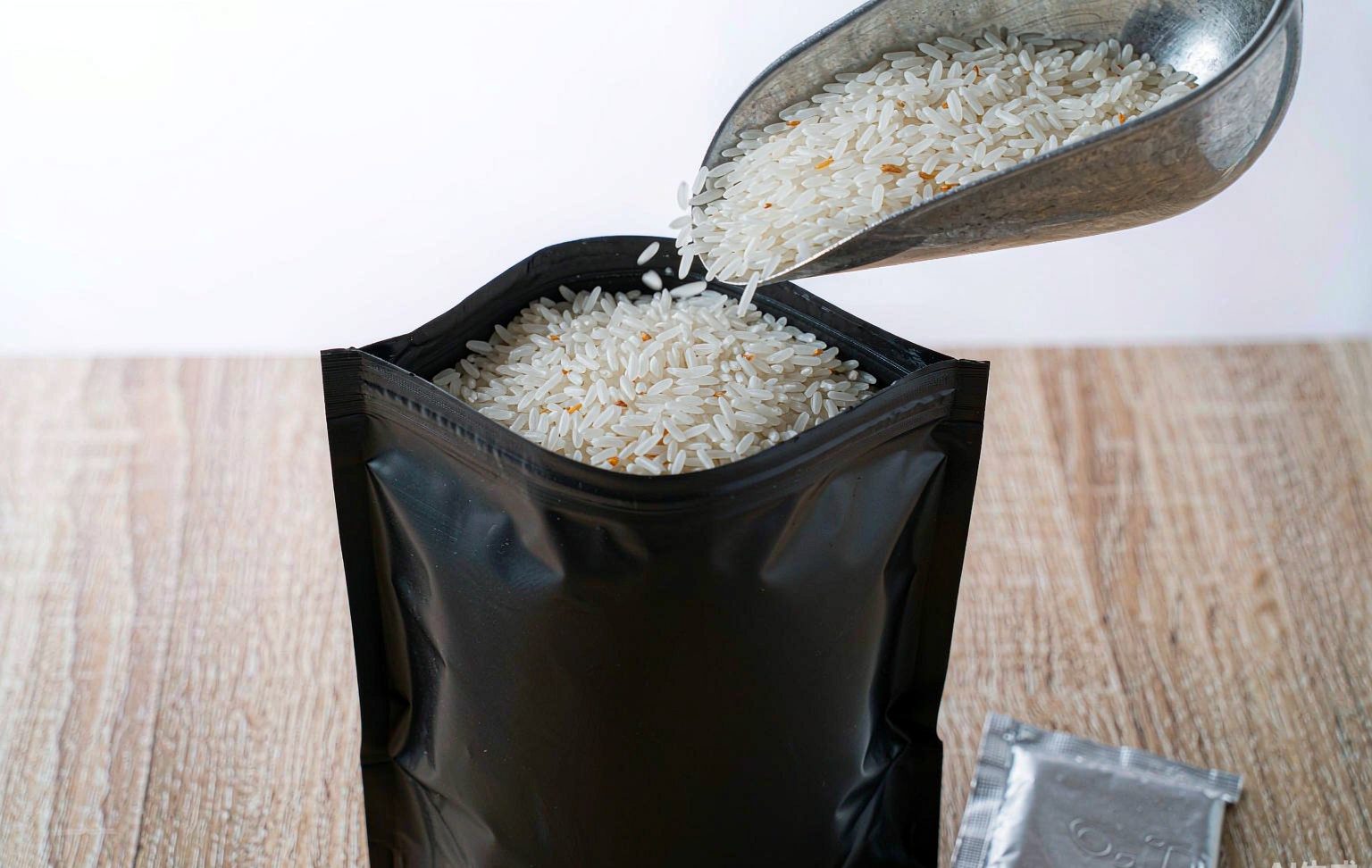
Fill the bag with dry rice straight from a sealed retail package, leaving 3 to 4 inches of headspace at the top so the bag can be welded without rice in the seal zone. Headspace is easy to overlook when learning how to store rice in mylar bags, but a weld made over grains always leaks. Never wash rice before storing it; added moisture is the top trigger for mold in sealed environments.
Oxygen absorber sizing is where beginners get stuck: 100cc per quart, 300cc per gallon, and 2000cc to 3000cc per 5-gallon line. Absorbers react the moment the package opens, so a practical routine for how to store rice in mylar bags is to prep all bags first, open one absorber pack at a time, and seal within 15 minutes.
One absorber per bag is enough if the size is right. Forgetting the absorber entirely is the classic failure mode in how to store rice in mylar bags: a sealed bag without one keeps the trapped air, along with weevil eggs that sometimes ride in on grain. Freezing rice for 48 hours before bagging is optional insurance that kills surviving insect eggs.
Step 3: Seal the Bag Correctly
Sealing is the step where how to store rice in mylar bags succeeds or fails. Use a heat impulse sealer with at least a 2 mm seal wire. Clip the bag to a board edge for a straight weld, press for 2 to 3 seconds, and check that the seal is flat with no grains caught in it.
Double sealing is cheap insurance and a defining habit among people who know how to store rice in mylar bags well. Run a second weld a quarter inch below the first. After 24 hours, squeeze test the bag: a proper seal holds a brick-like feel as the absorber pulls the oxygen out, while a soft bag means the seal is leaking or the absorber was spent.
Step 4: Storage Conditions That Protect Rice
Temperature is the biggest lever on shelf life, and the final rule in how to store rice in mylar bags is environmental control. Rice kept at 70°F (21°C) lasts for decades in mylar; the same rice cycled through a 95°F garage ages several times faster. USDA figures behind 30-year white rice shelf life assume cool, stable conditions, so a basement shelf is the target.
Light is the second enemy, which is why how to store rice in mylar bags always ends with the same advice: keep bags in the dark, inside a tote, bin, or closed cabinet. Keep bags off concrete floors too, since concrete wicks moisture; a pallet or metal shelf solves this for free.
White Rice vs Brown Rice Shelf Life
Not all rice stores the same, so how to store rice in mylar bags starts with picking the right rice. The bran layer that makes brown rice nutritious also carries oils that go rancid, so brown rice in mylar is realistically a 1 to 2 year product even with oxygen absorbers. All white rice types, from jasmine to parboiled, store the same once the bran is gone.
| Rice Type | Shelf Life in Mylar + Absorbers | Notes |
|---|---|---|
| White long-grain | 20–30 years | Benchmark storage rice |
| Jasmine / Basmati | 20–30 years | Aroma fades slightly over time |
| Parboiled | 20–30 years | Holds texture well after cooking |
| Brown rice | 1–2 years | Store cool; rotate annually |
| Instant rice | 10–15 years | Cooks faster, stores slightly shorter |
That is the reality behind how to store rice in mylar bags: stock white rice for decades and rotate brown rice annually.
5 Mistakes That Ruin Stored Rice
Most failures in how to store rice in mylar bags trace back to five avoidable mistakes:
- Skipping the oxygen absorber. Sealed air plus grain moisture equals stale, insect-active rice within a year.
- Storing brown rice for the long haul. Its oils go rancid no matter how good the bag is.
- Sealing over rice grains. One grain across the weld line creates a pinhole channel that leaks oxygen.
- Heat and light exposure. Attics and sunlit shelves halve shelf life.
- No labels. Mark contents and sealing date on every bag; an undated bag in year five is a guess.
FAQ
How long does rice last in mylar bags with oxygen absorbers?
White rice stored below 70°F in a sealed 5 mil or thicker mylar bag with a correctly sized oxygen absorber is good for 20 to 30 years. Brown rice only lasts 1 to 2 years under the same conditions because its oils go rancid. Our rice shelf life guide covers the full data.
Do I need to wash rice before sealing it in mylar?
No. Washing adds surface moisture to a sealed low-oxygen environment and raises spoilage risk. Store rice dry and rinse only when you cook it.
What size oxygen absorber do I need for rice?
Use roughly 100cc per quart, 300cc per gallon, and 2000cc to 3000cc for a full 5-gallon line. One correctly sized absorber per bag is enough; more absorbers add no extra shelf life. Size matters more than quantity for anyone learning how to store rice in mylar bags.
Can I store rice in mylar bags without a heat sealer?
A household iron can seal 5 mil bags if you work slowly and test the weld. A dedicated impulse sealer pays for itself in avoided losses on 7 mil bags. Our mylar sealing guide shows both methods.
Does rice in mylar bags need to be rotated?
White rice needs no rotation within its 20 to 30 year window if storage stays cool and dark. Brown rice should be rotated every 1 to 2 years, so most planners keep it out of the deep reserve.
My mylar bag vs a bucket alone: which is better for rice?
Buckets alone are rodent-proof but oxygen-permeable. The best-practice setup for how to store rice in mylar bags is a sealed mylar liner inside a bucket: mylar handles oxygen and light, the bucket handles pests and punctures. The same logic applies to storing sugar and oatmeal long term.
The Bottom Line
Mastering how to store rice in mylar bags comes down to five habits: 5 mil or thicker food-grade bags, one correctly sized oxygen absorber, a clean double heat seal, a cool dark shelf, and a dated label. Do those consistently and one afternoon of packing becomes a 30-year food reserve. Next, see how the system works for pasta in mylar bags, and check the Wikipedia rice storage overview for the grain science behind these numbers.