Quick Answer: The 7 best types of beverage packaging are stand-up pouches, bag-in-box systems, aluminum cans, PET bottles, gable-top cartons, glass bottles, and flexible roll-stock sachets. Stand-up pouches win for lightweight branding and low shipping cost, bag-in-box wins for high-volume liquids, and cans win for shelf life and recycling rates. The table below compares all types of beverage packaging on barrier, shelf life, and best use so you can shortlist in one minute.
| Packaging Type | Oxygen Barrier | Typical Shelf Life | Best For |
|---|---|---|---|
| Stand-up pouch | High (foil/ALOx) | 9–18 months | Coffee, protein drinks, powders |
| Bag-in-box | Very high | 4–6 weeks after opening | Juice, soda syrup, wine, water |
| Aluminum can | Complete | 9–12+ months | Carbonated drinks, energy drinks |
| PET bottle | Moderate | 3–9 months | Water, juice, RTD tea |
| Gable-top carton | Moderate | Weeks (chilled) | Fresh milk, juice |
| Glass bottle | Complete | 12+ months | Premium juice, craft soda, mixers |
| Roll-stock sachet | High | 6–12 months | Single-serve mixes, samples |
In This Guide
- What Are the Main Types of Beverage Packaging?
- Stand-Up Pouches: Light, Bold, and Shipping-Friendly
- Bag-in-Box: The High-Volume Workhorse
- Cans, Bottles, and Cartons: The Rigid Types
- Roll-Stock Sachets for Single-Serve Drinks
- How to Choose Between the Types of Beverage Packaging
- Full Comparison at a Glance
- FAQ
- The Bottom Line
Choosing among the many types of beverage packaging is not a branding decision only. It decides your filling method, your shipping cost per unit, how long the drink stays fresh, and how your product looks on a shelf. This guide walks through the seven types of beverage packaging that dominate retail and e-commerce in 2026, where each one wins and loses, and a decision framework for growing drink brands.
What Are the Main Types of Beverage Packaging?
Most drink products fall into one of seven types of beverage packaging: flexible stand-up pouches, bag-in-box, aluminum cans, PET bottles, gable-top cartons, glass bottles, and roll-stock sachets. Flexible formats lead growth because they ship flat, use less material per unit, and print edge to edge. Rigid formats still win where carbonation, premium perception, or complete oxygen blocking matters. Understanding all types of beverage packaging starts with one question: what does your drink need most—barrier, weight, carbonation, or shelf impact?
When brands compare the types of beverage packaging side by side, three factors do most of the work: oxygen barrier (how much air reaches the liquid), freight efficiency (how much air you pay to ship), and consumer use occasion (home pantry, gym bag, or chiller). The sections below score each format on those factors.
Stand-Up Pouches: Light, Bold, and Shipping-Friendly
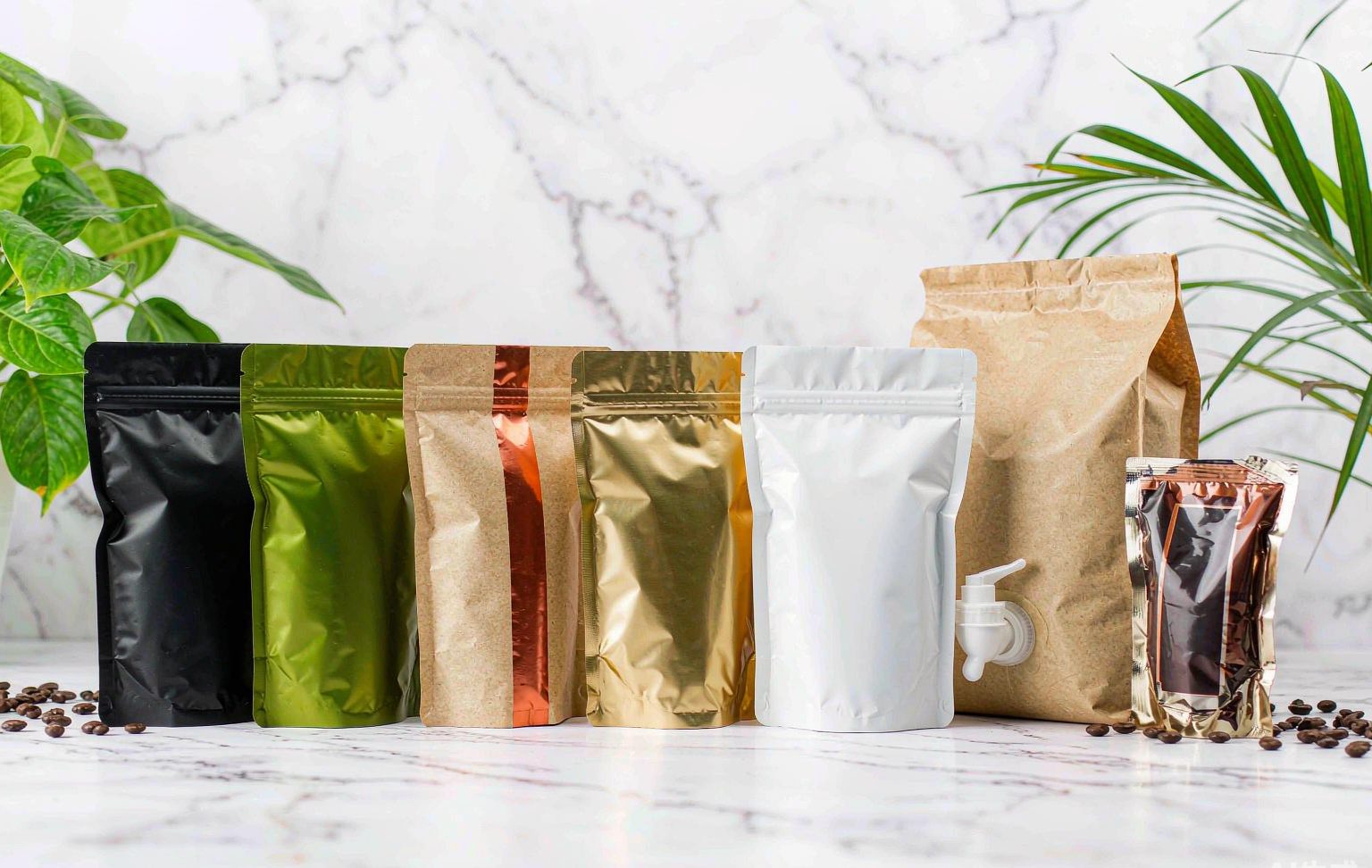
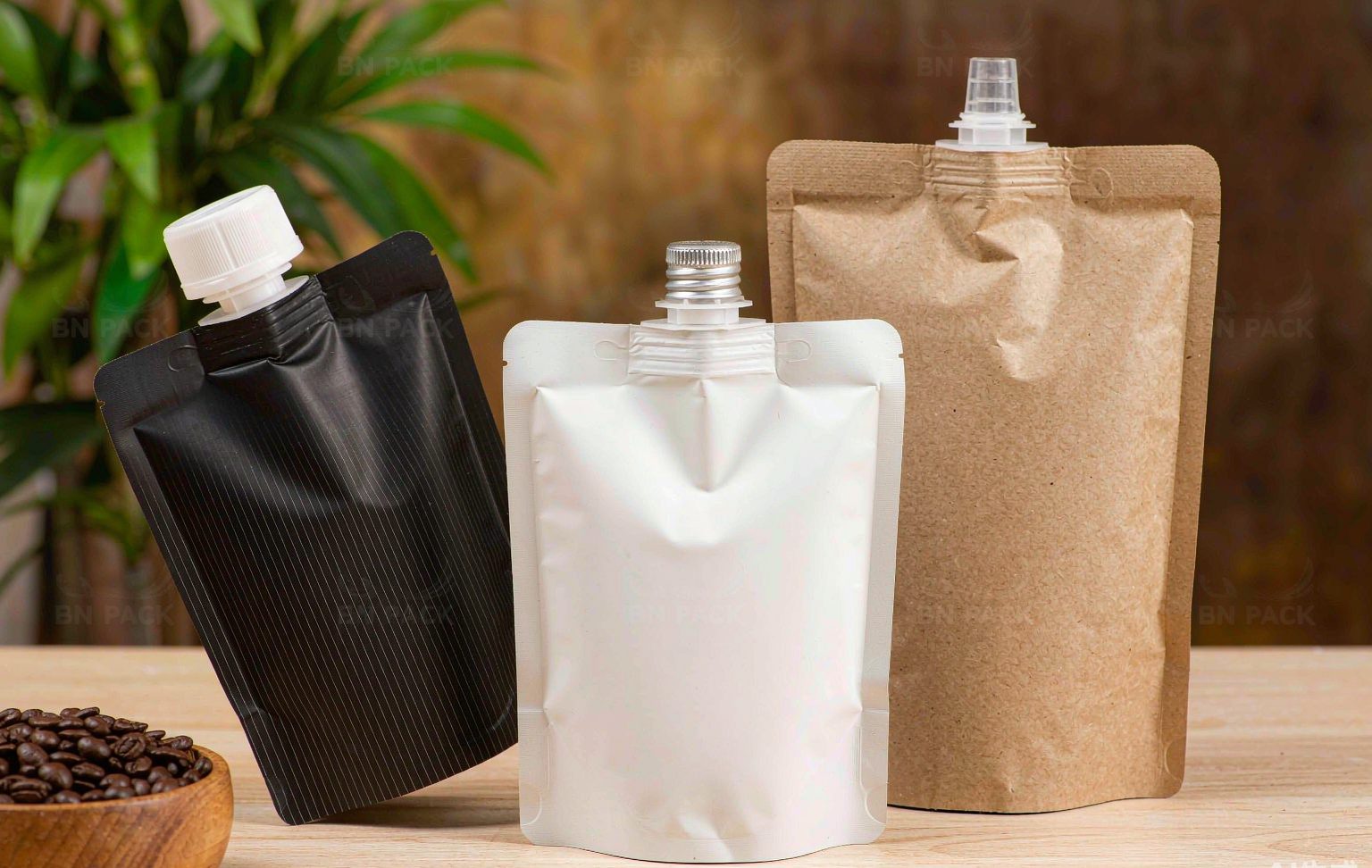
Stand-up pouches are the fastest-growing entry among the types of beverage packaging. A laminated pouch with a foil or ALOx barrier layer protects coffee, protein shakes, and powdered drinks for 9–18 months, weighs a fraction of a bottle, and ships flat before filling. Spouts and fitments now let pouches hold true liquids such as juice and sports drinks without leaking. For retail shelves, the full-surface print panel gives your brand more display area than any rigid format of similar volume. If you sell a drink powder or cold-brew concentrate, a stand-up pouch style guide is the fastest place to start.
The trade-offs are honest ones: pouches cannot hold carbonation for long, they need a filling line or a reliable co-packer, and puncture resistance depends on film thickness. Still, for powders and still liquids, pouches beat every other entry in the types of beverage packaging list on freight cost per serving.
Bag-in-Box: The High-Volume Workhorse
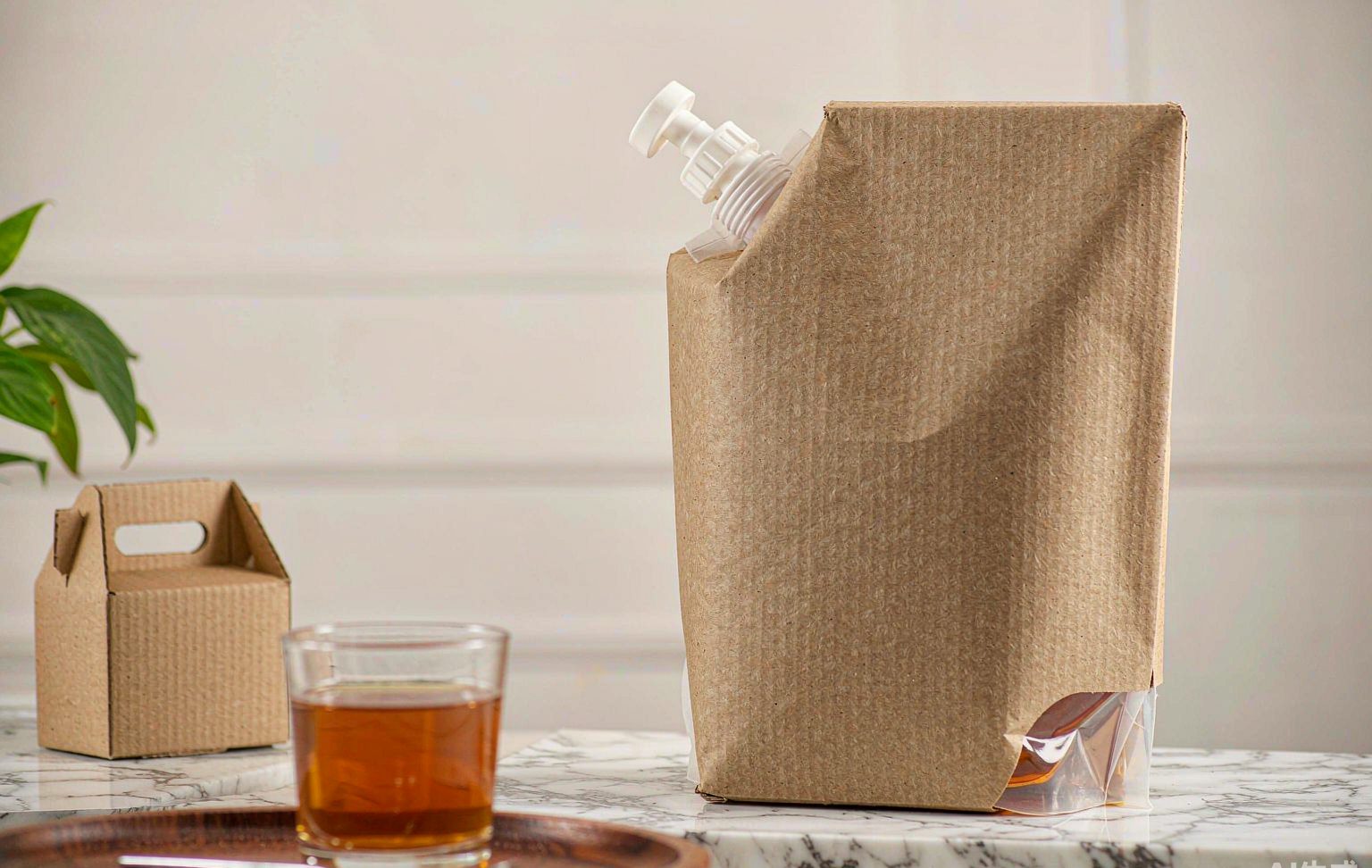
Bag-in-box pairs a flexible bladder with a corrugated outer box and a dispensing tap. Among the types of beverage packaging, it is the format built for volume: 3 to 20 liter bladders serve soda fountains, bars, offices, and family-size juice shelves. Because the bladder collapses as liquid leaves, opened product can stay fresh for 4–6 weeks—something no bottle or can matches. Operators running fountain programs can study a dedicated bag-in-box soda system to see how connectors, taps, and boxes fit together.
Bag-in-box also cuts freight dramatically: one pallet of empty bladders replaces several pallets of rigid containers. Filling is a simple two-step process, and teams new to the format can follow this how to fill bag-in-box guide before committing to equipment.
Cans, Bottles, and Cartons: The Rigid Types
Three rigid formats cover most of the remaining types of beverage packaging. Aluminum cans block oxygen and light completely, tolerate carbonation, and recycle at high rates, which is why energy drink and craft soda brands default to them. According to Wikipedia, the modern beverage can dates to 1935 and remains one of the most recycled food and drink containers in the world. PET bottles are cheap, transparent, and filling-line friendly, but their oxygen barrier is only moderate, so sensitive drinks lose freshness sooner. Gable-top cartons dominate chilled milk and fresh juice because they run on high-speed filling machines and print well, yet they need cold-chain retail to hit their shelf-life numbers.
Glass still anchors the premium end of the types of beverage packaging spectrum: a complete barrier, unlimited reuse, and a weight and feel consumers read as quality. The costs are freight, breakage, and higher minimum order quantities from glass plants.
Roll-Stock Sachets for Single-Serve Drinks
Roll-stock sachets are small sealed sticks and pillow packs made directly from printed film. In the context of types of beverage packaging, they serve single-serve instant coffee, electrolyte powder, drink mixes, and samples. Because film arrives on a reel, filling machines form, fill, and cut sachets at high speed with minimal labor, and the printed roll stock keeps unit cost low at scale. Sachets are also the cheapest way to let customers try a drink before buying a full pouch. Their limits are volume (a sachet holds grams, not liters) and a less premium feel than a stand-up pouch.
How to Choose Between the Types of Beverage Packaging
Use four questions to filter the types of beverage packaging down to one or two finalists. First, what is inside your beverage? Carbonated drinks need cans or glass; oxygen-sensitive drinks need foil barrier pouches, bag-in-box, or cans; powders tolerate almost any format. Second, where does it sell? Chiller retail favors cartons, pantry e-commerce favors pouches, and fountain or food service favors bag-in-box. Third, what is your volume? Low-volume launches live on stock pouches and contract filling; high volume justifies custom cans or cartons. Fourth, what does your buyer expect? Premium positioning pushes toward glass or a shelf-ready flat-bottom pouch, while value positioning points to sachets and PET.
Brands planning private label or contract runs should also compare packaging partners early, because minimum order quantities vary more between the types of beverage packaging than any other single factor. A shortlist review with an experienced supplier—the kind of conversation covered in this guide to beverage packaging companies—usually surfaces a format the brand had not priced at all.
Full Comparison at a Glance
The matrix below condenses the seven types of beverage packaging into the scores that matter in a buying meeting. Use it as a first filter, then request samples of the two formats that fit your product and volume.
| Type | Carbonation | Freight Efficiency | Shelf Impact | Relative Cost Tier |
|---|---|---|---|---|
| Stand-up pouch | No | Excellent | High | Mid tier |
| Bag-in-box | No | Excellent | Medium | Mid tier |
| Aluminum can | Yes | Poor (air inside) | High | Premium tier |
| PET bottle | Yes | Poor–Fair | Medium | Budget tier |
| Gable-top carton | No | Poor–Fair | Medium | Budget tier |
| Glass bottle | Yes | Poor | Very high | Premium tier |
| Roll-stock sachet | No | Best | Low–Medium | Budget tier |
Two footnotes keep the comparison honest: frozen and chilled drink programs behave differently from shelf-stable ones, as covered in this review of types of frozen food packaging; and cost tiers shift with volume, so a format that is premium tier at 5,000 units can reach mid tier at 500,000 units.
FAQ
Which of the types of beverage packaging keeps a drink fresh the longest? Cans and glass give a complete barrier and lead the shelf-life table, but unopened foil-barrier pouches and bag-in-box bladders come close for still drinks, and bag-in-box stays fresh longest after opening.
Are pouches safe for liquids? Yes. Pouches with welded spouts hold juice, water, and concentrates reliably; the critical checks are seal integrity and drop testing.
What is the cheapest option among the types of beverage packaging? At small volumes, stock PET bottles and roll-stock sachets cost the least. At large volumes, flexible formats usually win on total cost because freight and material use drop per unit.
Can one brand mix several formats? Yes, and most growing brands do: sachets for sampling, pouches for pantry sales, and cans or bag-in-box for retail and food service. Match each format to its sales channel instead of forcing one container to do every job.
How do I test a format before committing? Request blank or digitally printed samples, run a small filling trial, then do drop, seal, and accelerated shelf-life checks.
The Bottom Line
There is no single winner among the types of beverage packaging—there is only the right match for your drink, channel, and volume. Powders and concentrates favor stand-up pouches and sachets, high-volume liquids favor bag-in-box, carbonated and premium drinks favor cans and glass, and chilled staples favor cartons. Shortlist two formats with the comparison tables above, test with real product, and let shelf life and freight math—not habit—make the final call.