Quick Answer: How Many Oxygen Absorbers for 5 Gallon Buckets?
The working rule for oxygen absorbers for 5 gallon buckets is one 2,000cc absorber per bucket of low-moisture food such as rice, wheat, or flour, sealed in a Mylar liner. For dense grains packed tight you can step up to 2,500cc, and for lighter foods with more trapped air, such as rolled oats or pasta, use two 1,000cc absorbers or a single 3,000cc packet. The absorber does not create the vacuum; it chemically binds the residual oxygen left after the liner is pressed closed.
Getting oxygen absorbers for 5 gallon buckets right matters because a 5 gallon bucket holds roughly 18.9 liters of headspace plus the air trapped between kernels, and leftover oxygen is what turns brown rice rancid and bleaches flour within a year. The chart below converts the rule into concrete packet counts, and the rest of this guide explains why the numbers work and where people go wrong.
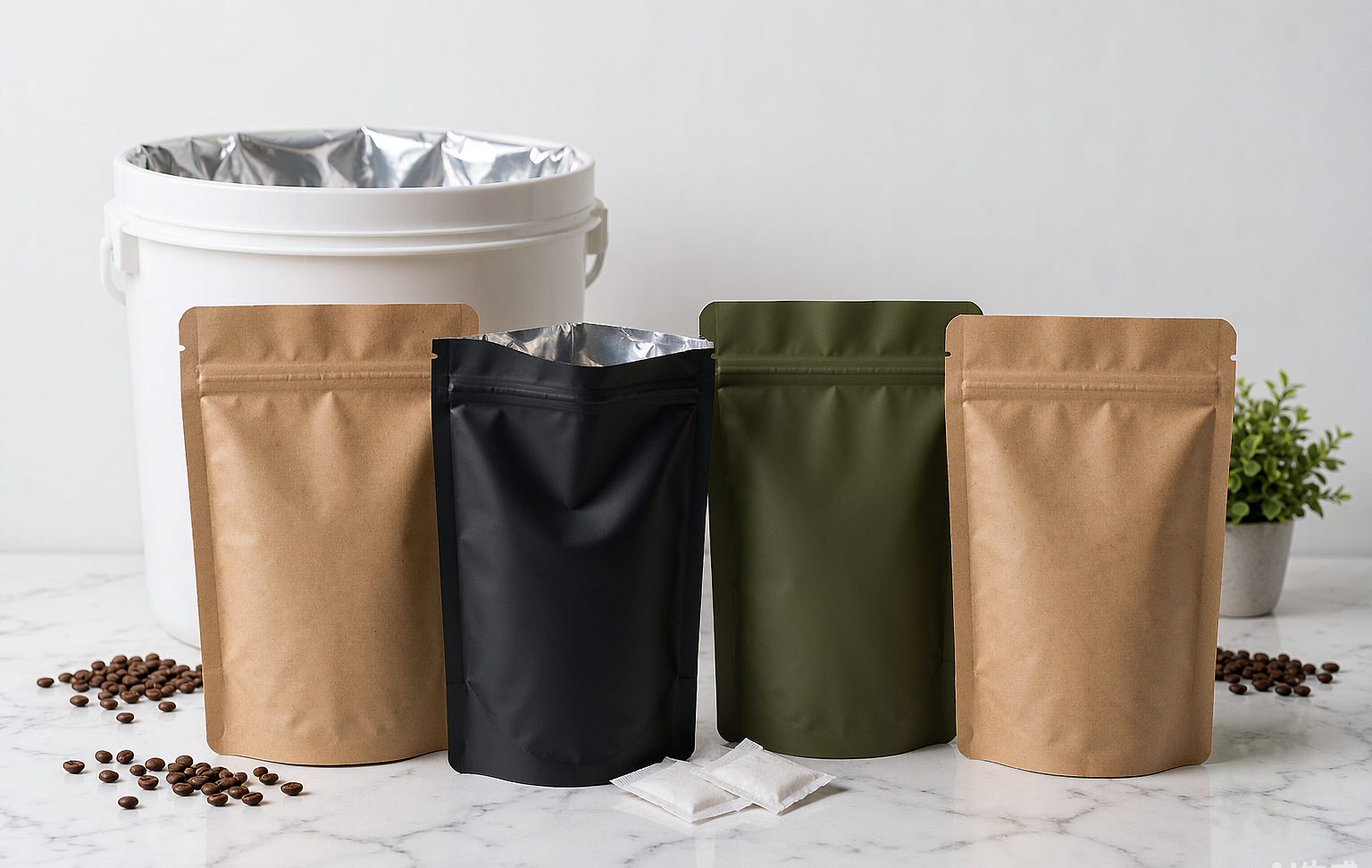
| Food in the bucket | Approx. fill weight | Recommended absorber | Notes |
|---|---|---|---|
| White rice, hard wheat | 33-37 lbs | 1 × 2,000cc | Dense grain, little trapped air |
| Flour, cornmeal | 30-33 lbs | 1 × 2,500cc | Fine particles hold more air |
| Dry pasta | 25-29 lbs | 2 × 1,000cc | Irregular shapes trap pockets |
| Rolled oats | 20-24 lbs | 2 × 1,000cc or 1 × 3,000cc | Flaky, high trapped air |
| Dried beans | 32-35 lbs | 1 × 2,000cc | Smooth, dense kernels |
| Granulated sugar or salt | 40+ lbs | None needed | Not prone to oxidation; seal for moisture only |
Our companion guide on how many oxygen absorbers per Mylar bag covers the same math at bag scale, and the two charts work together: buckets are the outer shell, Mylar is the true oxygen barrier inside.
In this guide:
- The oxygen absorber chart for 5 gallon buckets
- Why oxygen absorbers matter in bucket storage
- How to pick the right cc rating
- 5 mistakes that waste an absorber
- FAQ
- The Bottom Line
The Oxygen Absorber Chart for 5 Gallon Buckets
The chart above already gives per-food counts, but it helps to understand what a cc rating actually means. A 2,000cc absorber is engineered to bind 2,000 milliliters of oxygen gas, which is roughly the free oxygen available in the headspace and kernel gaps of a filled bucket. Manufacturers deliberately rate packets conservatively, so matching the rating to the fill is safer than it sounds, and it is why oxygen absorbers for 5 gallon buckets get their own chart instead of sharing the bag-scale table.
When people plan oxygen absorbers for 5 gallon buckets, the two variables that move the number most are how dense the food packs and how much air the fill displaces. A bucket of popcorn kernels traps far less air than the same bucket of extruded cereal, even at identical fill weights. If your food falls between two rows of the chart, size up; an oversized absorber never hurts, an undersized one quietly fails.
For context on how liners change the picture, our breakdown of standard Mylar bag thicknesses explains why a 4.5-5 mil liner is the usual partner for bucket storage, and our guide to what mil thickness means decodes the spec if you are new to film gauges.
Why Oxygen Absorbers Matter in Bucket Storage
Even a well-sealed bucket is not airtight in the way people assume. HDPE plastic passes small amounts of gas over time, and the moment the lid opens for a scoop, a fresh charge of air floods in. An oxygen absorber works during and after the seal, pulling the headspace oxygen down below roughly 0.1 percent, the level where weevils cannot hatch and most oxidative rancidity stalls.
This is why oxygen absorbers for 5 gallon buckets do double duty: they protect the initial pack and they keep working through every reopen-and-reseal cycle, as long as exposure time stays short. Insects are the quieter threat, by the way. Eggs already present in grain die off in an oxygen-starved bucket, which is why absorber-packed rice survives years that open-shelf rice does not, a pattern our guide on how long rice lasts in Mylar bags documents in detail.

One boundary is worth stating plainly: absorbers control oxygen, not moisture. Sugar and salt resist oxidation, so they need no absorber at all; what they need is a dry environment, which is also why our guide on how long sugar lasts in Mylar bags focuses on humidity instead of cc ratings.
How to Pick the Right cc Rating
Packet sizes on the market run from 50cc for small retail pouches up to 3,000cc for pails, so matching the rating to the container is a straightforward three-step check.
- Estimate headspace air. Fill the bucket with food, then judge the empty volume above the fill line plus visible gaps between pieces. Dense grains leave 15-20 percent air; flaky foods can exceed 30 percent.
- Convert to oxygen. Air is about 21 percent oxygen, so a bucket with 3 liters of trapped air contains roughly 600cc of oxygen. A 2,000cc packet covers it several times over, which is the safety margin you want.
- Round up, never down. Between two ratings, take the larger. The chemical iron powder in the packet is harmless in food storage; the spare capacity simply extends the working life. The same conservatism governs oxygen absorbers for 5 gallon buckets filled with mixed foods, where one dense layer sits under one flaky layer.
Splitting large absorbers is another lever. Many preppers load oxygen absorbers for 5 gallon buckets as two 1,000cc packets instead of one 2,000cc packet, because smaller packets stay active longer once the vacuum bag is opened during packing, and two packets placed at different depths even out the pull across deep fills.
5 Mistakes That Waste an Absorber
Most absorber failures we hear about are not chemistry problems; they are handling problems. The five below account for nearly all of them, and chart-consistent loading of oxygen absorbers for 5 gallon buckets prevents two of the five rows outright.
| Mistake | What happens | Fix |
|---|---|---|
| Leaving the packet bag open while packing | Absorber saturates in 15-30 minutes of air exposure | Open the master bag last; keep spares in a glass jar |
| Sealing a flimsy liner with pinholes | Oxygen re-enters and the absorber burns out in weeks | Use 4.5+ mil Mylar liners, not thin zip bags |
| Under-rating “to save” packets | Headspace oxygen never fully clears | Follow the chart; round up |
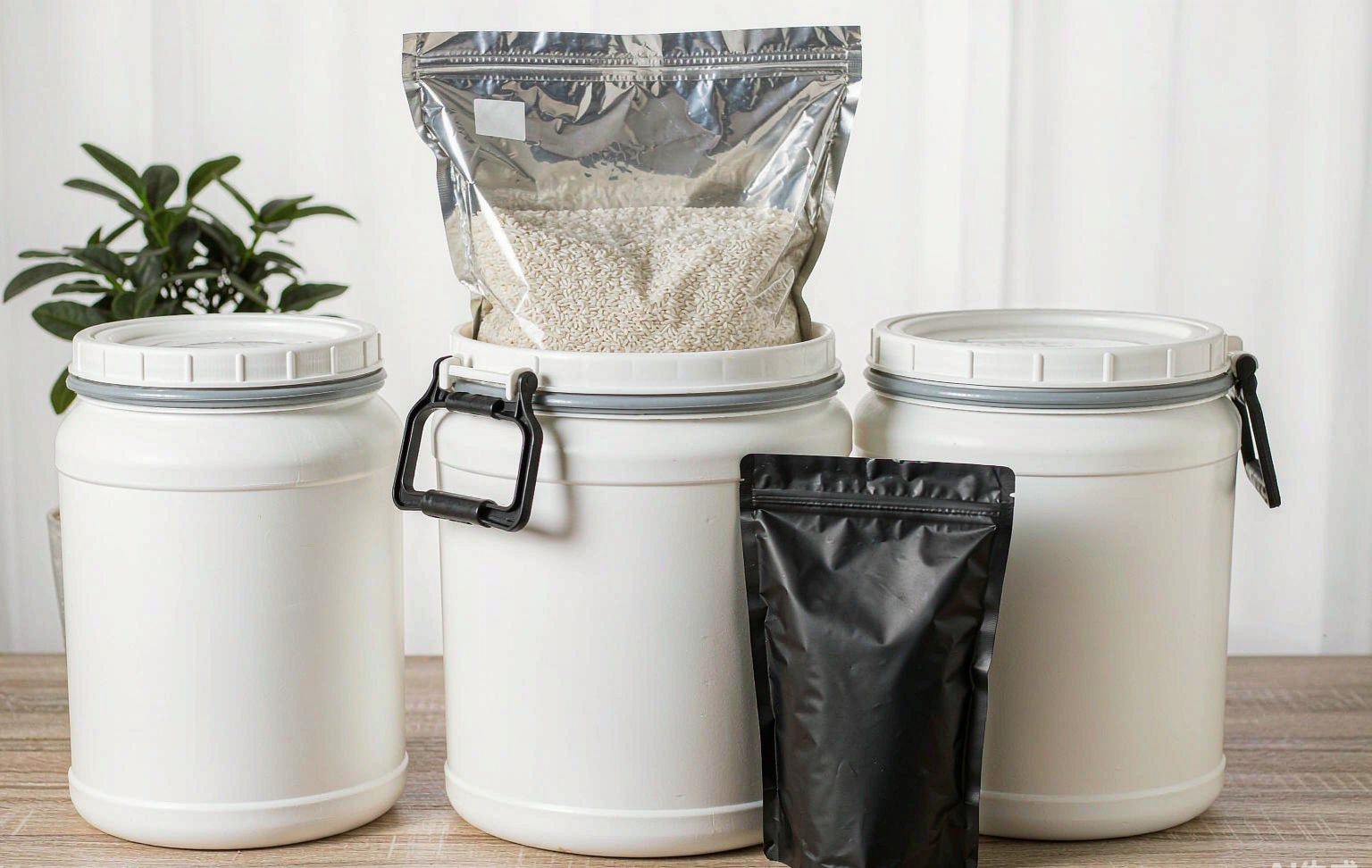
| Skipping the liner entirely | Absorber pulls through the lid gasket forever and dies | Absorber goes inside the Mylar, not the bare bucket |
| Impulse-sealing over food crumbs | Seal leaks; the packet keeps working but loses the race | Wipe the seal zone, press a flat, wide seam |
Notice a pattern: the packet itself is the easy part. Oxygen absorbers for 5 gallon buckets fail when the seal around them fails, so spend your attention on liner quality and seam integrity first. Our guide on how long flour lasts in Mylar bags shows what a correct seal delivers over multiple years, and our overview of Mylar bag sizes helps you pick a liner that fits your buckets without deep folds.
FAQ: Oxygen Absorbers for 5 Gallon Buckets
How many 2,000cc oxygen absorbers for 5 gallon buckets of rice?
One 2,000cc absorber is the standard answer for a 5 gallon bucket filled with white rice or hard wheat. The dense fill traps little air, so a single packet drops headspace oxygen below the threshold where weevils and rancidity survive within days.
Can I use several smaller packets instead of one large one?
Yes, and it is often safer. Two or three smaller packets deliver the same total cc rating for oxygen absorbers for 5 gallon buckets, but they tolerate packing delays better because each packet keeps reserve capacity until it is individually exposed.
Do oxygen absorbers work without Mylar inside the bucket?
Poorly. A bare HDPE bucket leaks oxygen continuously, so an absorber placed directly in the bucket exhausts itself long before the food needs protection. The absorber and the Mylar liner are a system; each one is half a solution on its own, which anyone loading oxygen absorbers for 5 gallon buckets without a liner discovers within weeks.
How long do unused packets last once the bag is open?
Roughly 15 minutes to a few hours depending on packet size and humidity. Packets that stay firm and slightly squishy are active; a packet that has gone hard and crumbly like a rock is spent. Store unopened packets in a sealed jar with the air pressed out.
Are oxygen absorbers safe next to food?
The packet contents are iron powder and salt in a sealed, food-safe sachet, and the industry packs them in direct contact with packaged foods worldwide. Keep them buried under the food surface rather than taped where a child might chew them, and discard any packet with a broken outer layer.
The Bottom Line
The dependable default for oxygen absorbers for 5 gallon buckets is one 2,000cc packet per bucket of dense grain, sized up to 2,500-3,000cc for flour, oats, and pasta, and skipped entirely for sugar and salt. Pair the packet with a 4.5 mil or thicker Mylar liner, seal a clean wide seam, and work fast once the master bag is open, because the chart only holds when the seal does. Loaded that way, oxygen absorbers for 5 gallon buckets quietly deliver decade-class shelf stability without any other equipment.