Quick Answer: how to seal gusseted bags reliably comes down to using a heat sealer with enough bar width to close the full bag width in one pass, pressing the gussets flat first so the seal line is smooth, and verifying the finished seal with a squeeze or water-bath test. The 7 best methods are a handheld impulse sealer, a 12-inch bar impulse sealer, a constant-heat band sealer, a vacuum chamber sealer, a crimped double seal, a clip-and-fold temporary close, and a household iron for emergency work.
Gusseted bags are the workhorses of flexible packaging: side-gusset coffee bags, bottom-gusset stand-up pouches, and flat-bottom pouches all earn their shelf presence from those folded panels. But the same gussets that make a bag stand tall also make it awkward to close, because a wide, puffy bag never lines up flat under a narrow sealing bar. That is why learning how to seal gusseted bags is mostly about geometry: seal it wrong and you get wrinkles, channel leaks, or a burned-through corner. This guide walks through each method, the settings that matter, and the habits behind a factory-clean seal.
In this guide:
- Know Your Gusset Types First
- How to Seal Gusseted Bags: 7 Methods Compared
- Sealer Settings That Matter
- Fixing Wrinkles, Leaks, and Burn-Through
- FAQ
- The Bottom Line
Know Your Gusset Types First
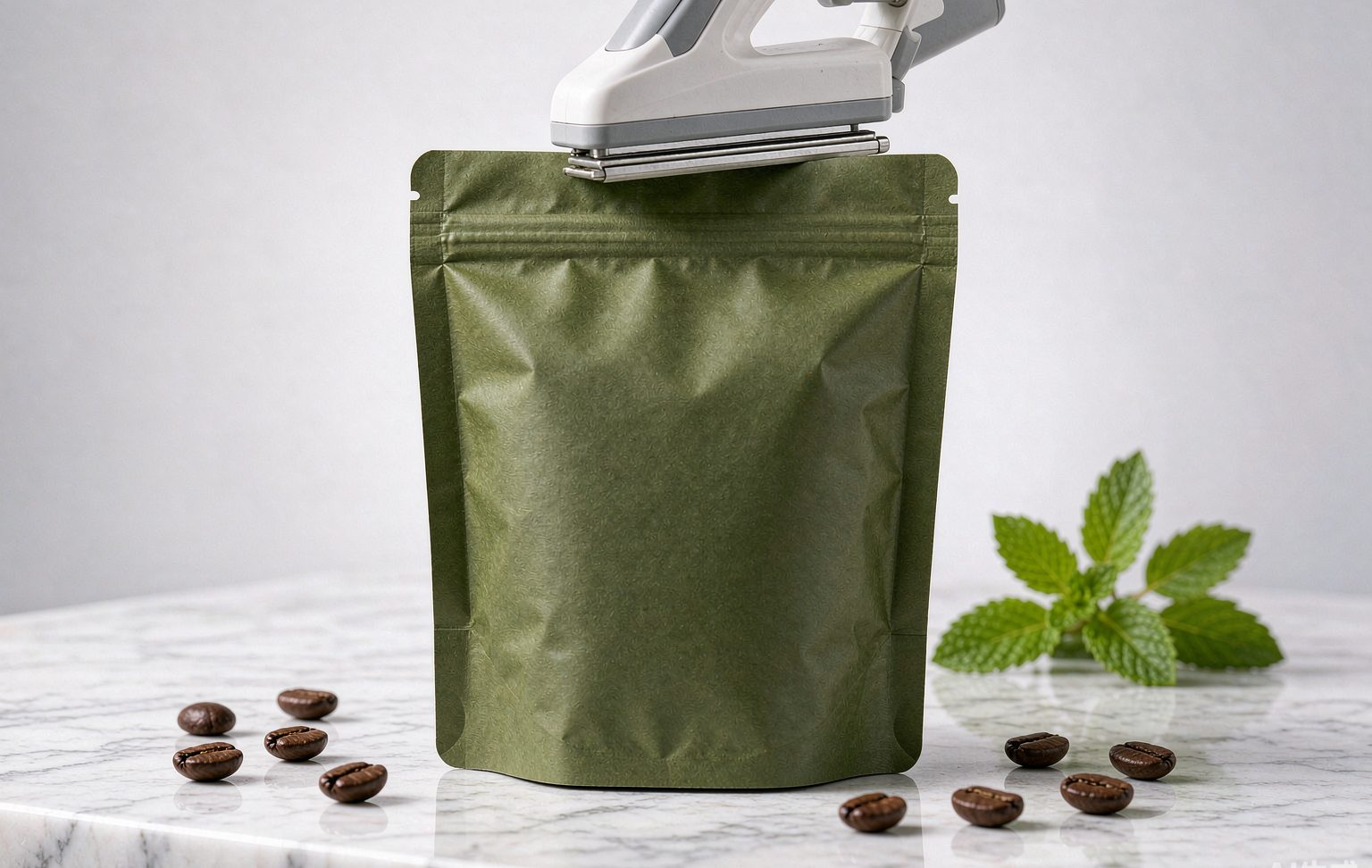
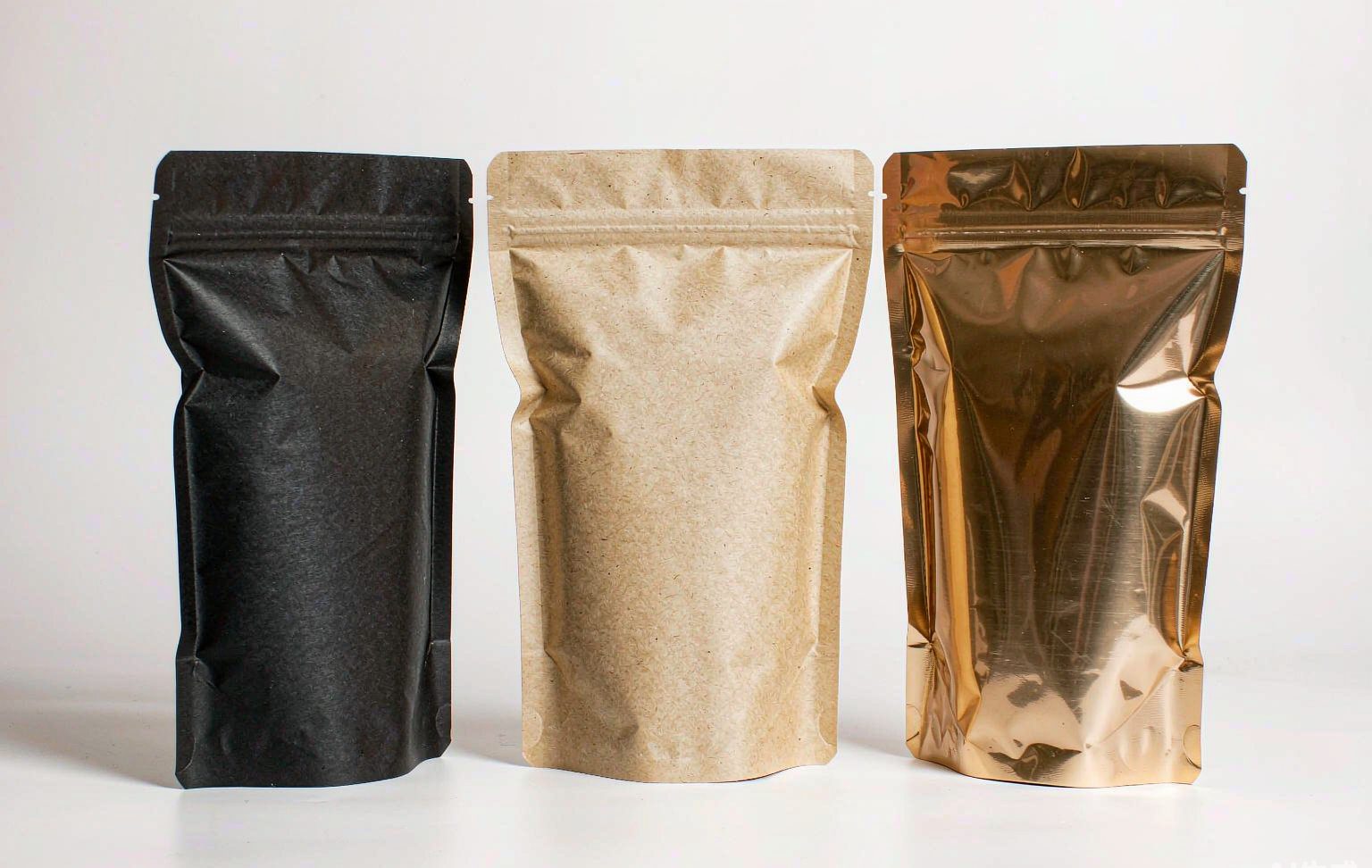
Before you practice how to seal gusseted bags, know which gusset you have. A side-gusset bag folds extra film into the sides, so it lies flat and seals almost like a flat pouch. A bottom-gusset bag, which includes every stand-up pouch, opens into an oval base and gets wider at the top once filled. Flat-bottom pouches have a rectangular base and the largest top width of the three. If you are still choosing a structure, our comparison of side gusset vs bottom gusset bags and this overview of the flat bottom pouch cover the trade-offs.
Width is the number to watch when you plan how to seal gusseted bags: a half-pound side-gusset coffee bag runs about 4 inches across, while a filled kilo flat-bottom pouch can run 8 inches or more at the seal. Your sealer bar must span the bag width in one pass; two overlapping passes almost always leave a channel leak in the overlap zone.
How to Seal Gusseted Bags: 7 Methods Compared
Here is the full menu, from production equipment down to household improvisation. Small food businesses learning how to seal gusseted bags will use the first three methods for 90 percent of jobs.
| Method | Best For | Typical Seal | Speed |
|---|---|---|---|
| Handheld impulse sealer | Small batches, sampling | 2-3 mm single wire | 3-5 s per bag |
| 12-inch bar impulse sealer | Wide gusseted pouches | 2-3 mm, or 5 mm double wire | 3-5 s per bag |
| Constant-heat band sealer | Production lines | 8-10 mm embossed | Continuous |
| Vacuum chamber sealer | Coffee, nuts, oxygen-sensitive foods | Gas-flush + seal | 20-40 s per cycle |
| Crimped double seal | Thick foil and mylar film | Two parallel wires | 5-8 s per bag |
| Clip or tin-tie close | Temporary retail re-close | None (mechanical) | 1-2 s |
| Household iron (no steam) | Emergency field work | About 5 mm | 10-15 s per bag |
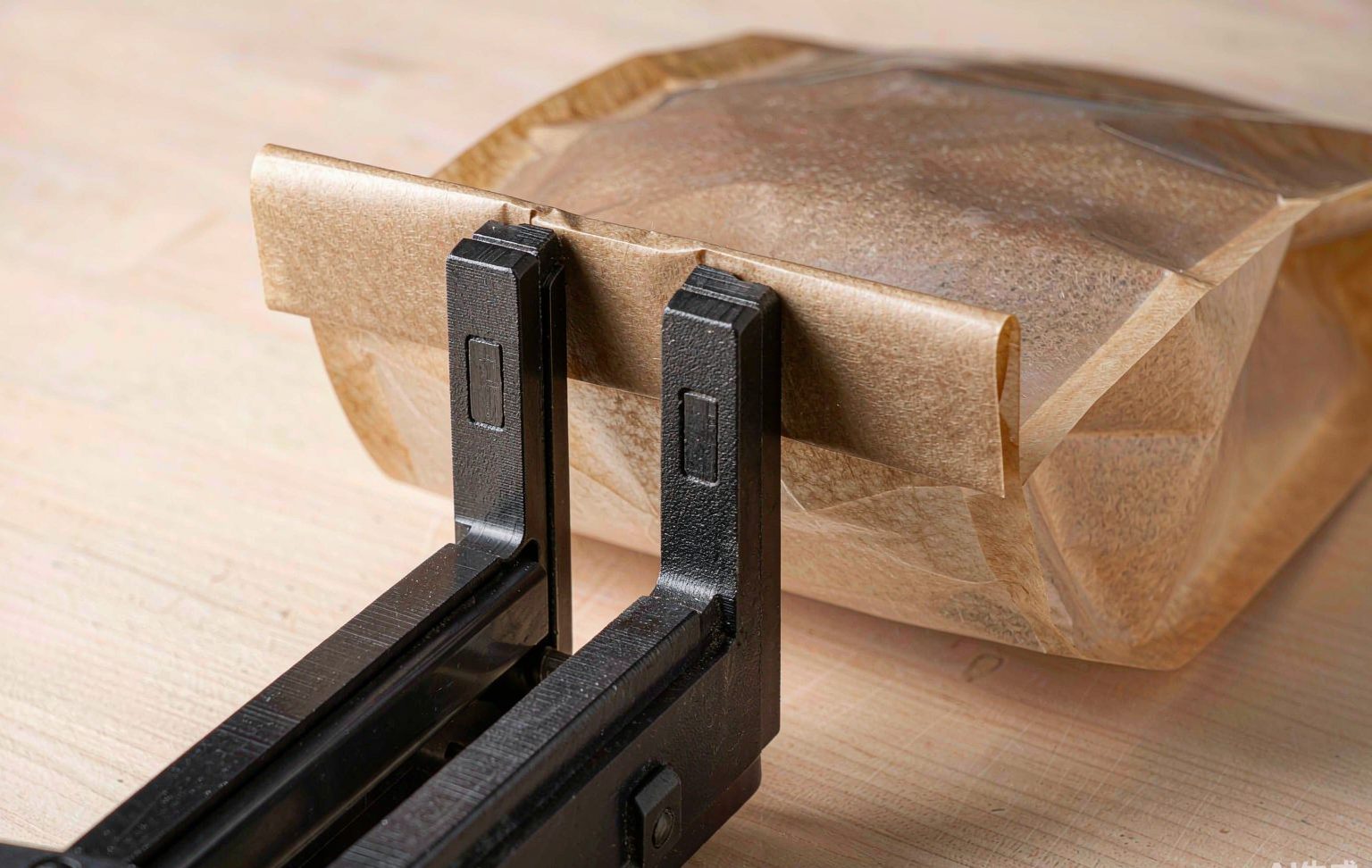
1. Handheld impulse sealer. The 8-inch impulse sealer is the default starter tool, and the simplest answer to how to seal gusseted bags on a budget. Clamp the flat top in the jaw, hold for the full dwell (usually 2-4 seconds on 4-6 mil laminate), and release. One wire gives a thin 2-3 mm seal, fine for kraft and light laminates but fragile on thick foil.
2. 12-inch bar impulse sealer. Step up to a 12-inch bar with a 5 mm double-wire element when your gusseted bags run wide or thick. The double wire lays down two parallel seals, the standard answer for puncture-prone film. Our buyer’s guide to the best heat sealers for mylar bags compares bar widths and element types.
3. Constant-heat band sealer. Closing hundreds of bags a day takes a continuous band sealer, which pulls each bag through heated rollers and embosses an 8-10 mm seal automatically. For anyone scaling up how to seal gusseted bags, it handles them well because the rollers flatten the top as they grip, and it is the only realistic option at production speed.
4. Vacuum chamber sealer. For oxygen-sensitive fills like whole-bean coffee, a chamber machine pulls a vacuum on the whole bag, optionally gas-flushes with nitrogen, and seals on a wide bar. Gusseted bags sit naturally flat in a chamber, so this is the cleanest premium finish. For the pouch-specific version, see our guide on how to seal stand up pouches.
5. Crimped double seal. Thick foil-laminated gusseted bags reward a second pass: seal once 5 mm below the top, trim, then seal again through the remaining tail. Two independent seal lines mean a pinhole in one rarely leaks the pack. This double-seal logic is core to how to seal gusseted bags in thick foil, and it applies when you seal foil bags for long-term storage.
6. Clip or tin-tie close. Many retail gusseted coffee and bakery bags ship with a tin-tie and fold-over top rather than a heat seal. It is deliberately resealable, not airtight, so pair it with an inner heat-sealed liner if shelf life matters.
7. Household iron. In a pinch, a dry iron on medium-high pressed across a wooden straightedge closes most laminated gusseted bags acceptably. Slow and inconsistent, but it works when a sealer dies mid-run, which is why every guide on how to seal gusseted bags keeps it on the list.
Sealer Settings That Matter
Three variables decide how to seal gusseted bags well: temperature, dwell time, and pressure. Laminated films with an inner poly or CPP sealing layer typically need 250-350°F (120-175°C) at the jaw; start low and increase until the seal turns uniformly translucent with no film distortion. Dwell time for an impulse sealer on 5 mil laminate is usually 2-4 seconds. Pressure should be firm but light enough that the wire does not cut through, and the jaw must sit on a flat plane, not the crown of a bulging gusset.
For the seal-science background, the Wikipedia article on heat sealers explains impulse versus constant-heat designs, and Mylar covers why metallized polyester demands more energy than plain polyethylene. On the structural side, our explainer of fin seal vs lap seal shows how machine-made closures differ from the open-end seal you make when you work out how to seal gusseted bags for your own product.
Fixing Wrinkles, Leaks, and Burn-Through
Most failures in how to seal gusseted bags trace back to three habits. First, sealing over a puffy bag: always press the product down and flatten the gussets so the top is a single smooth plane; a wrinkle folded into the seal is a guaranteed channel leak. Second, over-dwelling thin zones: the corner where the gusset meets the edge has double film, so it needs more heat than the middle; if the middle burns while the corners stay loose, step up to a double-wire element instead of more time.
Third, testing by look alone: the honest test is a gentle squeeze, a water-bath dip for critical packs, and a 24-hour recheck on vacuum-pulled bags. Run two test bags at different dwell times whenever you change film, because that is the fastest way to calibrate how to seal gusseted bags on a new structure.
If you are designing your own gusseted bags rather than closing purchased ones, the build-side guide on how to make a gusset bag walks through folding and forming, and it pairs naturally with this guide to how to seal gusseted bags.
FAQ
Can I seal gusseted bags with a regular impulse sealer?
Yes. The bar-width check is step one of how to seal gusseted bags: the bar must be at least as wide as the flattened bag top. Side-gusset bags seal almost like flat pouches; wide stand-up and flat-bottom pouches usually need a 12-inch bar. If the bag is wider than the bar, move up to a wider machine or a band sealer instead of overlapping two passes.
How long should I hold the sealer on a gusseted bag?
Timing matters in how to seal gusseted bags: on a 4-6 mil laminated gusseted bag, 2-4 seconds of impulse dwell is the usual starting point, extended until the seal line is uniformly translucent. Thick foil structures can need 5 seconds or more. Judge by the seal’s appearance, not the clock: a good seal is flat, slightly glossy, and shows no melt-through.
Why does my gusseted bag seal leak at the corners?
Corners have doubled or tripled film where the gusset folds in, so they need more heat than the center. Flatten the gussets completely so the fold sits flat rather than bunched, and consider a 5 mm double-wire element, which lays down more energy across thick zones. Anyone learning how to seal gusseted bags should test two dwell times on scrap bags before committing a batch.
Is a clip seal airtight enough for coffee or powder products?
No. Tin-ties and plastic clips are resealable conveniences, not barriers. For aroma-sensitive or moisture-sensitive products, heat-seal an inner bag or liner and use the clip as the outer retail close, which is exactly how most premium gusseted coffee bags are built.
How do I test whether a gusseted bag seal is airtight?
Three levels of testing how to seal gusseted bags: squeeze the sealed bag and listen for hissing; submerge it in water and look for bubbles; or vacuum-pull it in a chamber and check after 24 hours that the bag stays tight. A water-bath test on one bag per batch is a cheap quality gate for food-critical work.
The Bottom Line
Mastering how to seal gusseted bags is mostly about geometry, not machinery: flatten the gussets, match the bar to the bag width, and give thick corners enough energy without burning the middle. A 12-inch impulse sealer covers almost every small-batch job, a band sealer takes over at production volume, and a chamber machine earns its keep on coffee and other oxygen-sensitive fills. Seal flat, test honestly, and your gusseted bags will close as cleanly as they stand.