Quick Answer: the best heat sealer for mylar bags is an 8 mm impulse sealer with an adjustable timer, because mylar’s foil laminate needs a short, intense sealing pulse rather than continuous heat. For everyday long-term food storage, a tabletop impulse sealer with a 12-inch jaw handles most household bag widths, while vacuum chamber machines give commercial users the strongest, air-free seals. Hand-held mini sealers work only for thin snack-style mylar and are not reliable for 5 mil or 7 mil storage bags. The comparison table below ranks the main types, and each section explains who each machine fits.
| Sealer Type | Seal Quality | Best For |
|---|---|---|
| Impulse sealer (8 mm, 12 in jaw) | Strong | Home long-term storage |
| Constant heat sealer | Very strong | Thick 7 mil+ commercial bags |
| Vacuum chamber machine | Strongest | Commercial, air-free sealing |
| Hand-held mini sealer | Weak to fair | Thin snack bags only |
| Flat iron (emergency) | Fair | One-off backup sealing |
In This Guide
- Why Mylar Bags Need Heat Sealing
- Types of Heat Sealers Compared
- How to Choose a Heat Sealer for Mylar Bags
- Step-by-Step: Sealing Mylar with an Impulse Sealer
- 5 Common Sealing Mistakes to Avoid
- Sealing Without a Dedicated Machine
- FAQ
- The Bottom Line
Why Mylar Bags Need Heat Sealing
Mylar bags are made from laminated polyester film, usually with an aluminum core, which is what gives them their outstanding oxygen and moisture barrier. That barrier only works if the top edge is fused shut. Zipper closures are convenient for resealing, but they are not airtight enough for years-long storage, so every serious long-term food plan ends with a permanent heat seal.
Unlike plain polyethylene, the foil layer in mylar conducts heat away quickly, which is why a flimsy plastic-bag sealer often fails on it. You need a machine that delivers enough pulse energy to melt the inner laminate layers together. Our overview of how to seal heat seal bags and our guide to how to seal foil bags cover the general science, and this guide narrows it to picking the right heat sealer for mylar bags specifically.
Types of Heat Sealers Compared
Impulse sealers
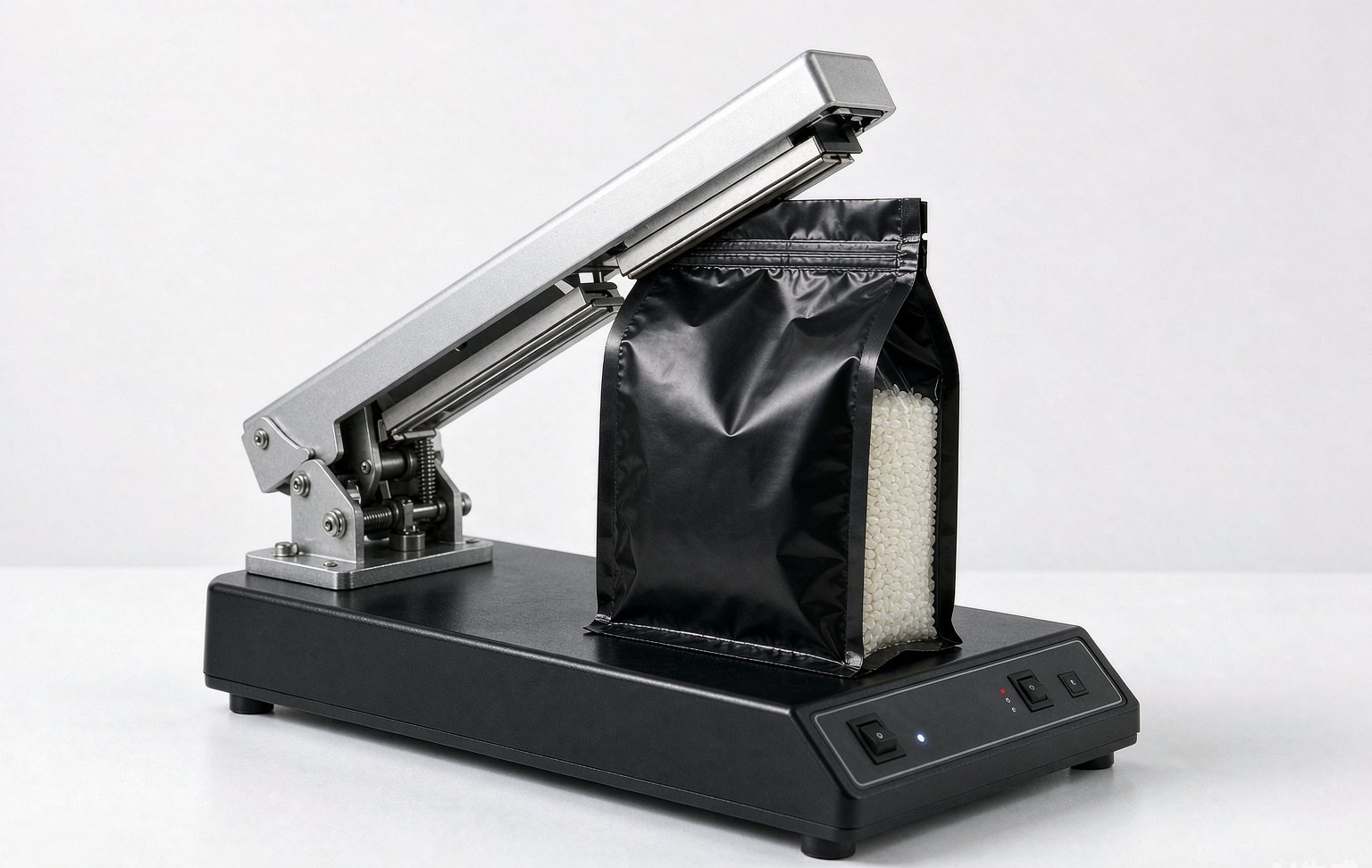
An impulse sealer heats a thin resistance wire only while the arm is pressed down, then cools instantly. That pulse style is ideal for mylar because the foil layer would otherwise pull heat away and produce weak spots. Look for a 2.8 mm to 8 mm seal width; wider seals are more forgiving on thick bags. A 12-inch jaw covers nearly all food storage bag widths, from pint bags up to 5-gallon liner bags cut from a roll. For most buyers, an impulse unit is the practical heat sealer for mylar bags.
Constant heat sealers
Constant heat sealers keep the bars permanently hot, the way industrial packaging lines do. They produce very consistent seals on heavy laminates and seal faster in repeated runs, which makes them the production-grade heat sealer for mylar bags when a business packs dozens of bags per session. The trade-off is a learning curve: dwell time must be tuned, and mylar can over-melt if the setting runs hot.
Vacuum chamber machines
A vacuum chamber machine removes air from the chamber before sealing, producing the tightest possible package. For delicate, powdery, or liquid-rich foods this is the professional route. It is also the most expensive tier, so most households get better value from a good impulse unit plus oxygen absorbers.
How to Choose a Heat Sealer for Mylar Bags
Run any heat sealer for mylar bags through this five-point checklist before buying:
- Jaw width: 12 inches covers household needs; 16 inches if you seal wide 5-gallon bag openings.
- Seal width: 8 mm seals handle 5 mil and 7 mil laminates reliably; 2 mm works for 3.5 mil and thinner.
- Timer adjustment: a numbered dial lets you tune pulse length for each bag thickness instead of guessing.
- Transformer rating: heavier units sustain repeated seals without overheating; ultralight models fade during batch work.
- Cutter and spare parts: a built-in cutter trims bag tops neatly, and replaceable resistance wires extend the machine’s life for years.
Bag thickness matters as much as the machine. If you are unsure whether 5 mil or 7 mil film suits your storage plan, our 5 mil vs 7 mil mylar bag thickness comparison breaks down when the extra durability pays off. A heat sealer for mylar bags rated for 8 mm seals gives you headroom on both thicknesses.
Step-by-Step: Sealing Mylar with an Impulse Sealer
- Fill the bag, leaving 2 to 3 inches of headspace at the top so the sealer has clean laminate to grip.
- Smooth the bag edge flat; wrinkles across the seal line are the number one cause of pinhole leaks.
- Set the timer dial to a medium setting and test on a scrap piece first, then step up until the seal shows uniform translucency.
- Press the arm firmly for the full pulse, hold one extra second for cooling, then release.
- Double-seal for storage beyond five years: make a second pass just below the first line as insurance.
- Tug-test the corner. A proper seal stretches the bag without peeling, and a quality heat sealer for mylar bags passes this test on its first calibrated setting.
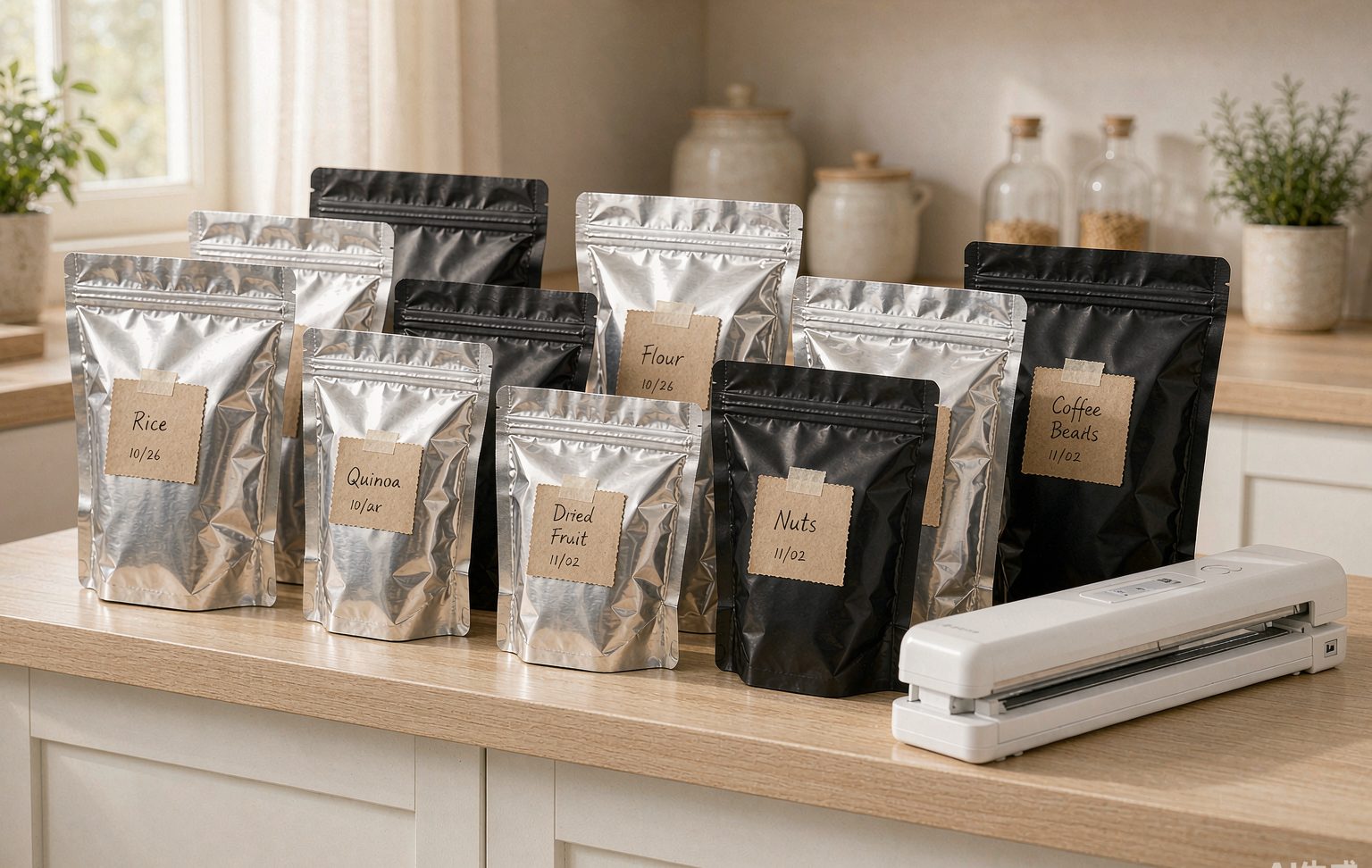
For pantry staples, pair the seal with the right absorber count. Our guide on oxygen absorbers for 5 gallon buckets includes sizing tables that work for large mylar liners too, and the how to store rice in mylar bags walkthrough shows the full fill-and-seal sequence end to end.
5 Common Sealing Mistakes to Avoid
- Most seal failures trace back to the heat sealer for mylar bags setup rather than the bags themselves.
- Sealing over food residue: oils or powders on the seal line prevent fusion. Wipe the inner edge clean first.
- Under-timing: a seal that looks closed can still delaminate. If the edge peels with finger pressure, increase the pulse.
- Over-timing: scorched laminate turns brittle and cracks in storage. Stop when the seal is uniformly translucent, never brown.
- Skipping the test seal: always calibrate on scrap, especially after changing bag brands or thickness.
- Ignoring headspace: overfilled bags force food into the seal zone. Two inches of clearance is the safe minimum.
Sealing Without a Dedicated Machine
Household irons and hair straighteners can fuse mylar in a pinch. Set an iron to medium-high with no steam, press through a sheet of parchment paper for several seconds, and check the result. Hair straighteners work on narrow bag tops but struggle with 7 mil laminate. These methods produce fair seals for short-term use, but for multi-year storage a proper heat sealer for mylar bags remains the dependable choice, because controlled pulse energy is exactly what foil laminates require.
FAQ
What size heat sealer do I need for mylar bags?
A 12-inch impulse sealer with an 8 mm seal width covers almost every household storage bag. Choose 16 inches only if you regularly seal wide 5-gallon liner openings.
Can a regular vacuum sealer seal mylar bags?
Most consumer vacuum sealers cannot create a reliable seal on mylar’s foil laminate because their clamp pressure and heat profile target textured poly bags. Some mid-tier machines have a dedicated mylar mode, but an impulse sealer remains the standard heat sealer for mylar bags.
How thick should mylar bags be for long-term storage?
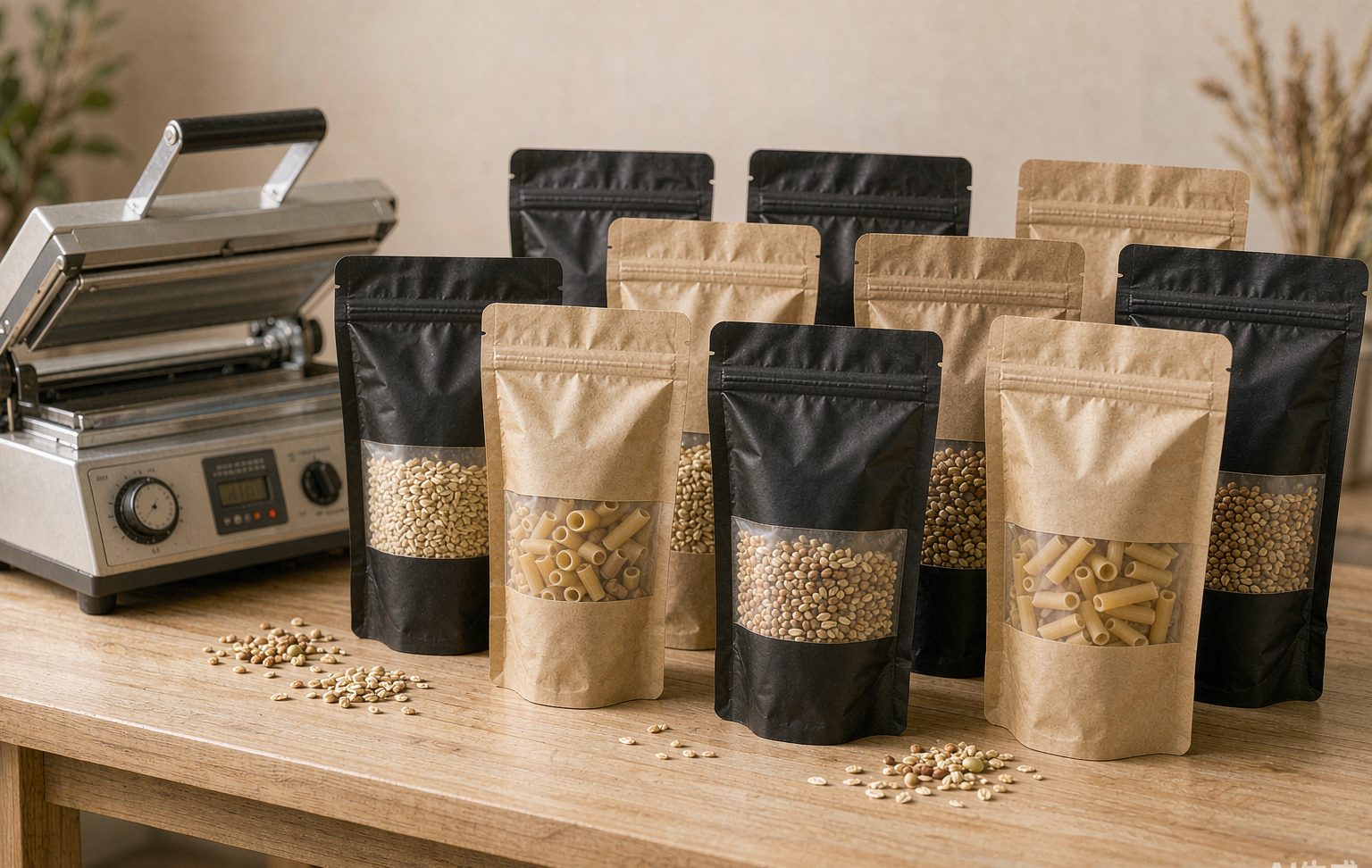
Food storage communities typically use 5 mil for most staples and 7 mil where puncture resistance matters, such as pasta or freeze-dried fruit with sharp edges.
Why is my mylar seal failing or peeling?
The usual culprits are an under-set timer, wrinkles or residue on the seal line, or a worn resistance wire. Re-test on scrap, clean the edge, and replace the wire if seals stay weak.
Do I still need oxygen absorbers if the bag is heat sealed?
Yes. Even the best heat sealer for mylar bags only locks the barrier; residual oxygen inside remains. Absorbers remove that trapped oxygen, which is what actually protects the food over years.
The Bottom Line
A heat sealer for mylar bags is a small purchase that decides whether your food storage actually lasts. For most households, an 8 mm impulse sealer with a 12-inch jaw and adjustable timer is the sweet spot; businesses and perfectionists step up to constant heat or vacuum chamber machines for throughput and air-free seals. Match the seal width to your bag thickness, always test on scrap, and finish with oxygen absorbers for true long-term protection. If you are still choosing film, our explainer on what is mil thickness clarifies how gauge ratings translate to durability, so the heat sealer for mylar bags and the film you buy are matched from day one.