Quick Answer: How to Store Pasta in Mylar Bags?
How to store pasta in mylar bags, in short: choose 5-7 mil pouches or food-grade buckets with mylar liners, add one 300cc oxygen absorber per gallon of dry pasta (2,000cc per 5-gallon bucket), heat-seal the bag above the pasta with 1-2 inches of headspace, then seal the bucket lid and store the whole setup below 75°F (24°C) away from light. Done this way, dry pasta that lasts 1-2 years in its store box is commonly rated by long-term storage communities at 20-30 years of quality.
The method works because pasta fails in storage for three reasons: oxygen staling, moisture, and pantry pests. A heat-sealed mylar bag with an oxygen absorber blocks all three at once, beating every store box or zip-top shortcut. The table maps the setup, and the steps below turn the question of how to store pasta in mylar bags into an afternoon routine for a whole case.
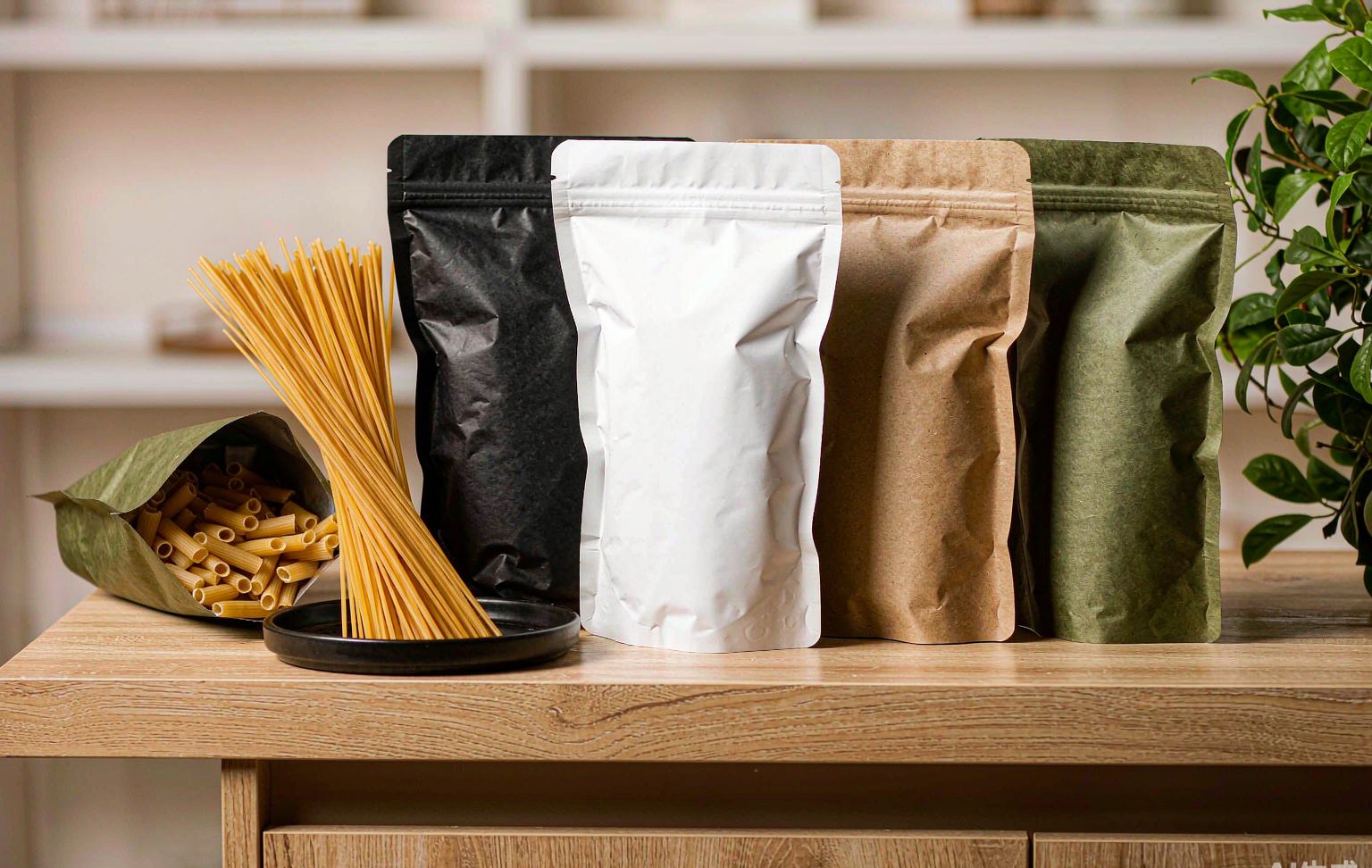
| Container | Holds | Oxygen absorber | Expected quality life* |
|---|---|---|---|
| 1-gallon mylar bag | about 3 lb of penne | 300-500cc | 20+ years |
| 5-gallon bucket with mylar liner | about 17-20 lb | 2,000cc | 20-30 years |
| 5-gallon mylar bag in a box | about 17-20 lb | 2,000cc | 20-30 years |
| Quart snack pouch | about 1.5 lb | 100-300cc | 20+ years |
*Quality-life figures follow long-term storage community conventions, not an official standard; pasta stays safe indefinitely if kept dry and pest-free, but texture declines.
In this guide:
- How to store pasta in mylar bags: 7 steps
- Oxygen absorbers, mil thickness and buckets
- How long pasta actually lasts
- 7 mistakes that ruin stored pasta
- FAQ
- The Bottom Line
How to Store Pasta in Mylar Bags: 7 Steps
How to store pasta in mylar bags takes one routine, the same one taught at community food-packing events and scaled to a kitchen counter; only the sealing needs practice.
| Step | Action | Key detail |
|---|---|---|
| 1 | Pick the bag | 5-7 mil mylar; thicker resists rodent teeth and oxygen creep |
| 2 | Check the pasta | Sealed-box or freshly dried pasta, no broken flours or egg noodles older than a year |
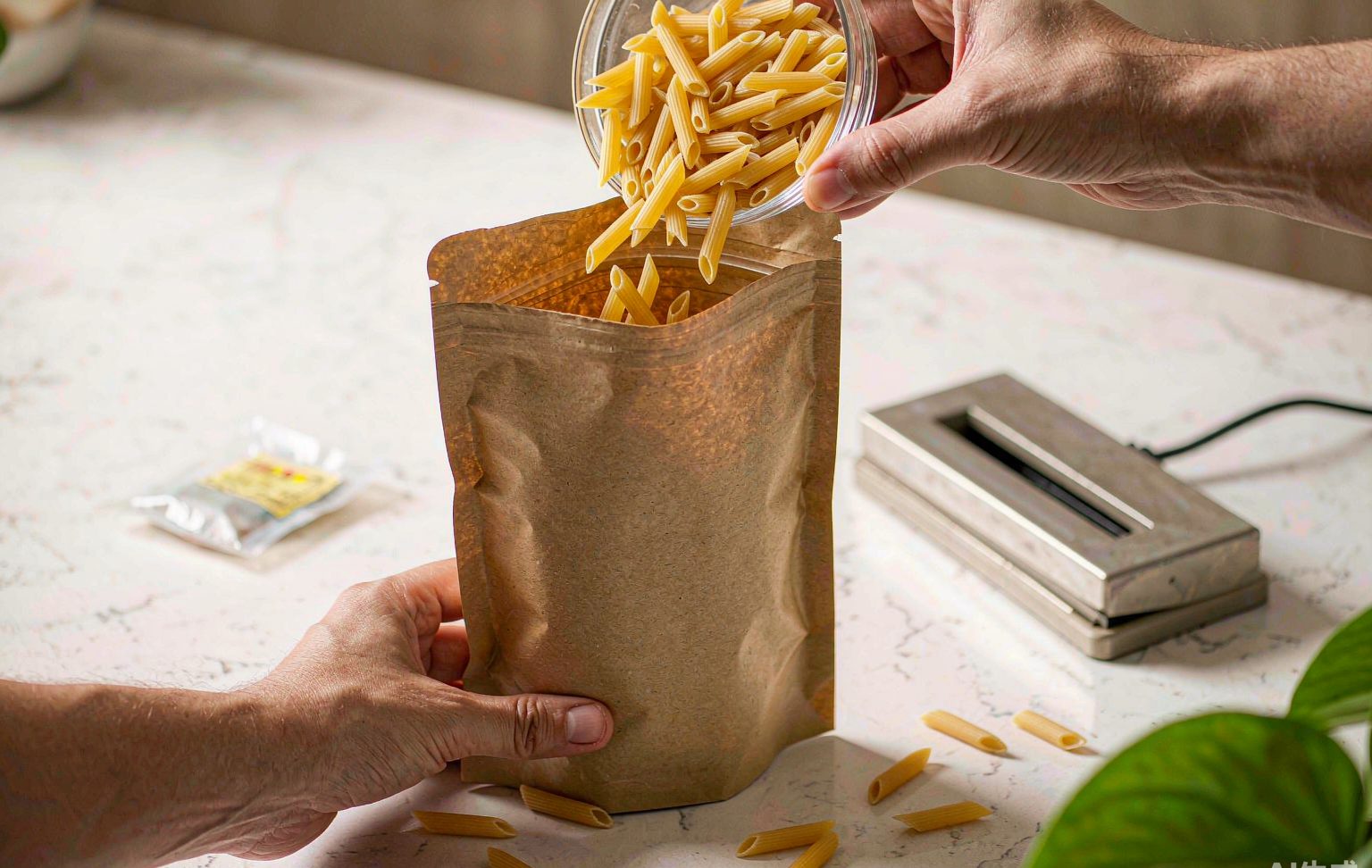
| 3 | Fill with headspace | Leave 2 inches at the top so the sealer has clean flat film to fuse |
| 4 | Add the absorber | 300cc per gallon of pasta, dropped in last and sealed fast |
| 5 | Heat-seal | Impulse sealer on the mylar setting, or a clothes iron on a wooden board, two parallel seams |
| 6 | Test the seal | Press gently; no air leak, no pasta dust at the seam, pouch tightens within 24-48 hours as the absorber pulls vacuum |
| 7 | Store cool and dark | Below 75°F, ideally a basement shelf; drop the bag into a bucket for rodent protection |
Two details decide success. First, fill speed: once the 300cc absorber hits open air it starts consuming oxygen immediately, so seal within ten minutes. Second, seal quality: how to store pasta in mylar bags for decades is really a question of whether the seam holds, which is why two parallel seams and a press test are worth ten extra seconds. Our walkthrough on how to seal mylar bags covers iron settings, impulse sealer temperatures and the water-bath leak test.
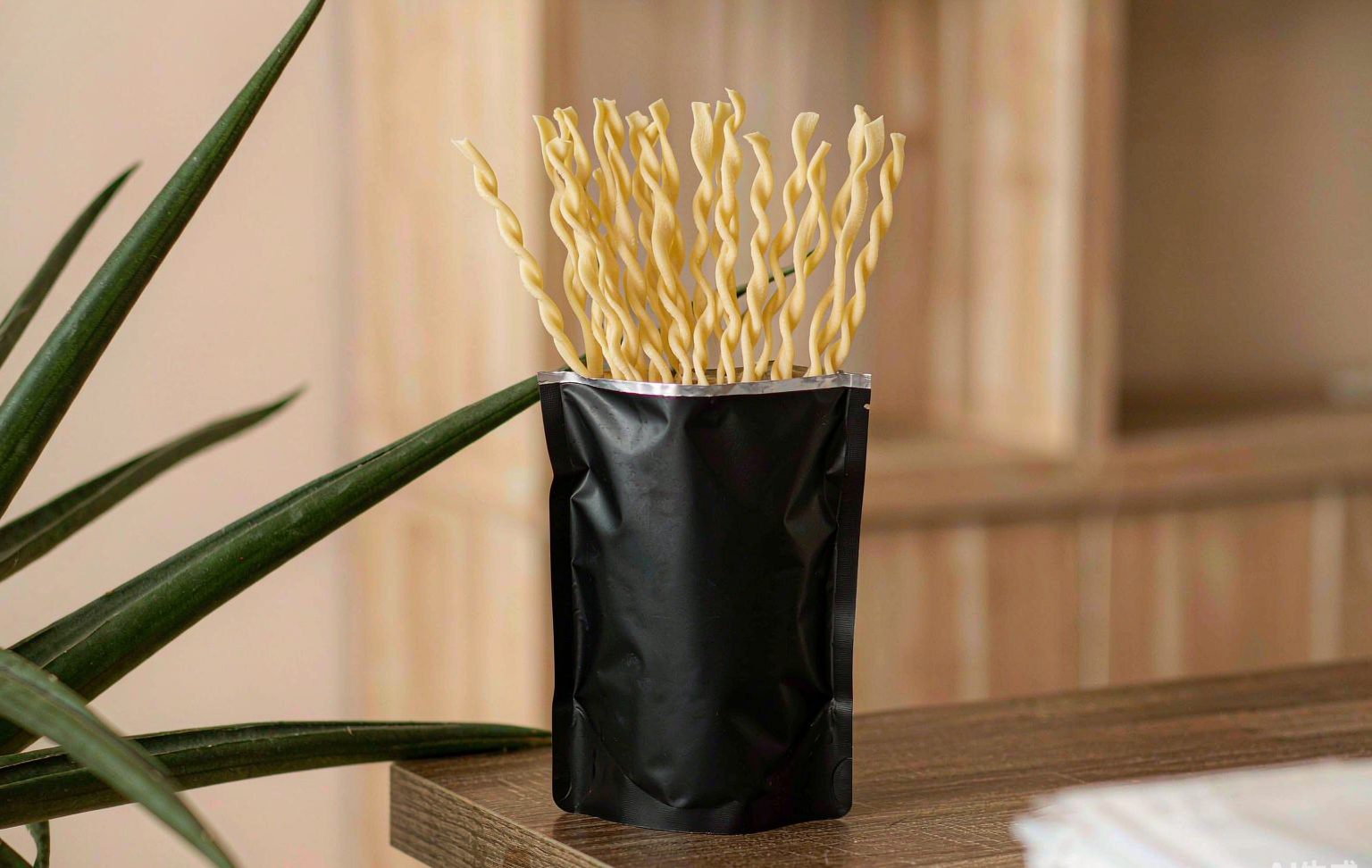
Shape matters too. Spaghetti stores perfectly in tall 1-gallon pouches laid horizontally, while short shapes such as penne, rotini and elbows pour cleanly into any format. That flexibility is a quiet bonus of learning how to store pasta in mylar bags: one bag size covers every shape you own. Whole-wheat pasta is the exception: its natural oils mean even a perfect seal only slows flavor staling, so rotate whole-grain shapes within a few years rather than decades.
Oxygen Absorbers, Mil Thickness and Buckets
The absorber chart is simpler than it looks: rated capacity is cubic centimeters of oxygen, and a gallon of pasta holds roughly 300-500cc of headspace oxygen depending on shape. Pasta is denser than chips and emptier than rice, so the standard lands at 300cc per gallon pouch and 2,000cc per 5-gallon bucket. When in doubt, size up; an oversized absorber never hurts, an undersized one leaves staling oxygen behind. That sizing rule is the arithmetic core of how to store pasta in mylar bags.
Mil thickness is the other spec separating a three-year bag from a thirty-year bag. Our explainer on what mil thickness means breaks down the measurement; 5 mil is the home-storage baseline, while 7 mil earns its keep for buckets and long-term kits, because dry spaghetti tips are the sharpest common product home storers bag.
Buckets answer the rodent problem that mylar alone cannot. A sealed 5-gallon bucket lined with a 5-7 mil mylar bag combines a pest-proof shell, a light-proof layer and a 2,000cc absorber in one package, which is exactly how to store pasta in mylar bags for a full warehouse-club case. Plan on three to four 1-gallon pouches per case of twelve one-pound boxes, or one lined bucket for four cases.
How Long Does Pasta Actually Last in Mylar?
Store-bought dry pasta carries a best-by window of roughly 1-2 years, and that label describes the cardboard box, not the pasta. Sealed in mylar with oxygen removed, semolina is remarkably stable: long-term storage practitioners routinely rate properly packed pasta at 20-30 years of good quality. Our deep dive on how long pasta lasts in mylar bags walks through the evidence and the texture changes at the far end of that range.
Three factors move that number: starting freshness, storage temperature, and seal integrity. Every 10°F drop roughly doubles the effective life of dry goods, so a cool basement beats an attic. And how to store pasta in mylar bags successfully over decades reduces to checking seams once a year; a pouch that still pulls tight is still doing its job. That yearly seam check is the entire maintenance side of how to store pasta in mylar bags.
7 Mistakes That Ruin Stored Pasta
Each of the seven below breaks how to store pasta in mylar bags in its own way, and most of them are invisible until the bag is opened years later.
- Using thin 2-3 mil party-store bags. They puncture on spaghetti tips and let oxygen creep within a few years. Stay at 5 mil or above.
- Skipping the absorber. A sealed bag without one still traps the air in the headspace, enough to stale flavor and feed any surviving weevil eggs.
- Packing egg noodles or fresh pasta. Their fat content goes rancid on its own timeline regardless of oxygen; dry semolina shapes only.
- Sealing over dust. Flour dust or pasta dust across the seam line makes microscopic leak channels. Wipe the inside edge before fusing.
- One giant bag with no plan. Every opening resets the clock. Pack in gallon portions and unseal only what a month of dinners needs.
- Bugs already inside. Pantry weevils ride in on store packaging; the oxygen-free environment kills adults and eggs alike, or freeze pasta for a week first if the boxes sat in a pantry for months.
- Storing on a garage wall in summer. Heat is the silent killer of every storage plan; mylar blocks light and oxygen but not a 100°F wall.
The good news is that none of these mistakes are expensive. Absorbers cost pocket change in bulk, and a 7 mil pouch multiplies usable life several times over, which is why how to store pasta in mylar bags on a budget is so forgiving. Compare that with the grain-safety math in our guides to rice in mylar and sugar in mylar: pasta lands in the middle of the difficulty range, easier than oily whole grains, fussier than pure sugar. Oatmeal packers face similar trade-offs, as our note on oatmeal in mylar bags explains.
FAQ: Storing Pasta in Mylar Bags
How many oxygen absorbers does a 5-gallon bucket of pasta need?
One 2,000cc absorber per full 5-gallon bucket is the standard; pasta packs looser than rice, so many packers add a second 300cc unit as insurance.
Can you store pasta in mylar bags without a bucket?
Can you store pasta in mylar bags without a bucket? Yes, with two cautions: rodents can eventually chew through mylar, and light slowly degrades thin film, so a dark closet or plastic tote solves both. That habit is the heart of how to store pasta in mylar bags without a dedicated pantry room.
What thickness mylar bag is best for pasta?
5 mil is the accepted baseline and 7 mil is the upgrade for long-term kits, mostly because dry spaghetti is sharp enough to work against thinner film at the corners. Thickness is the quiet decider in how to store pasta in mylar bags for decades.
Do you need to freeze pasta before sealing it in mylar?
Only if the pasta has lived in a pantry long enough for weevil eggs to arrive, which is common with warehouse-club boxes. A 48-hour freezer stint kills adults and eggs; a fresh factory-sealed case does not need it. This is the least glamorous part of how to store pasta in mylar bags, and the one that saves the most heartbreak.
Does cooked pasta store in mylar bags?
No. Mylar with oxygen absorbers is a dry-goods system; cooked pasta needs canning or freezing, and an oxygen-free moist bag creates a botulism risk instead of solving storage.
The Bottom Line
How to store pasta in mylar bags is a seven-step routine: 5-7 mil pouches, dry semolina shapes only, two inches of headspace, 300cc absorber per gallon, a fast double heat-seal, a press test, and a cool dark shelf or a lined 5-gallon bucket with a 2,000cc absorber. Run that sequence on a warehouse case of penne and the pasta that fades in two years in its box holds good quality for a generation, one gallon pouch at a time.
Pasta has an even longer storage pedigree than our buckets, as the pasta history notes: dried noodles were invented precisely because they keep. Mylar simply finishes the job on a pantry timescale. And for matching absorbers across a whole pantry, our chart on how many oxygen absorbers per mylar bag covers every food type in one table.