

You probably already know that a 12 oz bag of coffee is the gold standard size for most craft roasters…
But how much caffeine fuel does that actually translate to when you’re standing in your kitchen on a Monday morning?
The short answer is that a standard 12 oz bag yields anywhere from 16 to 24 cups of coffee.
Why such a massive range? Because the final count hinges entirely on your brewing method, your preferred coffee-to-water ratio, and how massive your favorite morning mug actually is.
If you want to stretch your bean budget, master your daily brewing weight, or just figure out exactly when you’ll need to buy your next bag, you’re in the right place.
Let’s break down the exact math so you never run out of morning fuel.
How Many Cups of Coffee in 12 Oz Bag?
If you are a specialty coffee roaster or a daily drinker, knowing exactly how much fuel is in that bag is essential. The short answer is that a standard 12 oz bag yields between 16 to 24 cups of coffee.
12 oz Bag = 16 to 24 Standard Cups (8 oz)
The variation depends entirely on how strong you brew your coffee. To understand the math, we first need to clear up a common point of confusion: dry weight ounces vs. fluid ounces. A 12 oz bag of coffee measures dry weight, which equals roughly 340 grams of whole bean coffee or ground coffee. It has nothing to do with the liquid fluid ounces of your final mug.
When you use the industry-standard specialty coffee-to-water ratio, you use about 14 to 17 grams of dry coffee grounds for every 8-ounce cup of water. If you prefer a lighter brew, you will lean toward the 24-cup mark. If you like a bold, robust extraction, you will land closer to 16 cups.
The Quick Reference Math: Cup Breakdown by Size
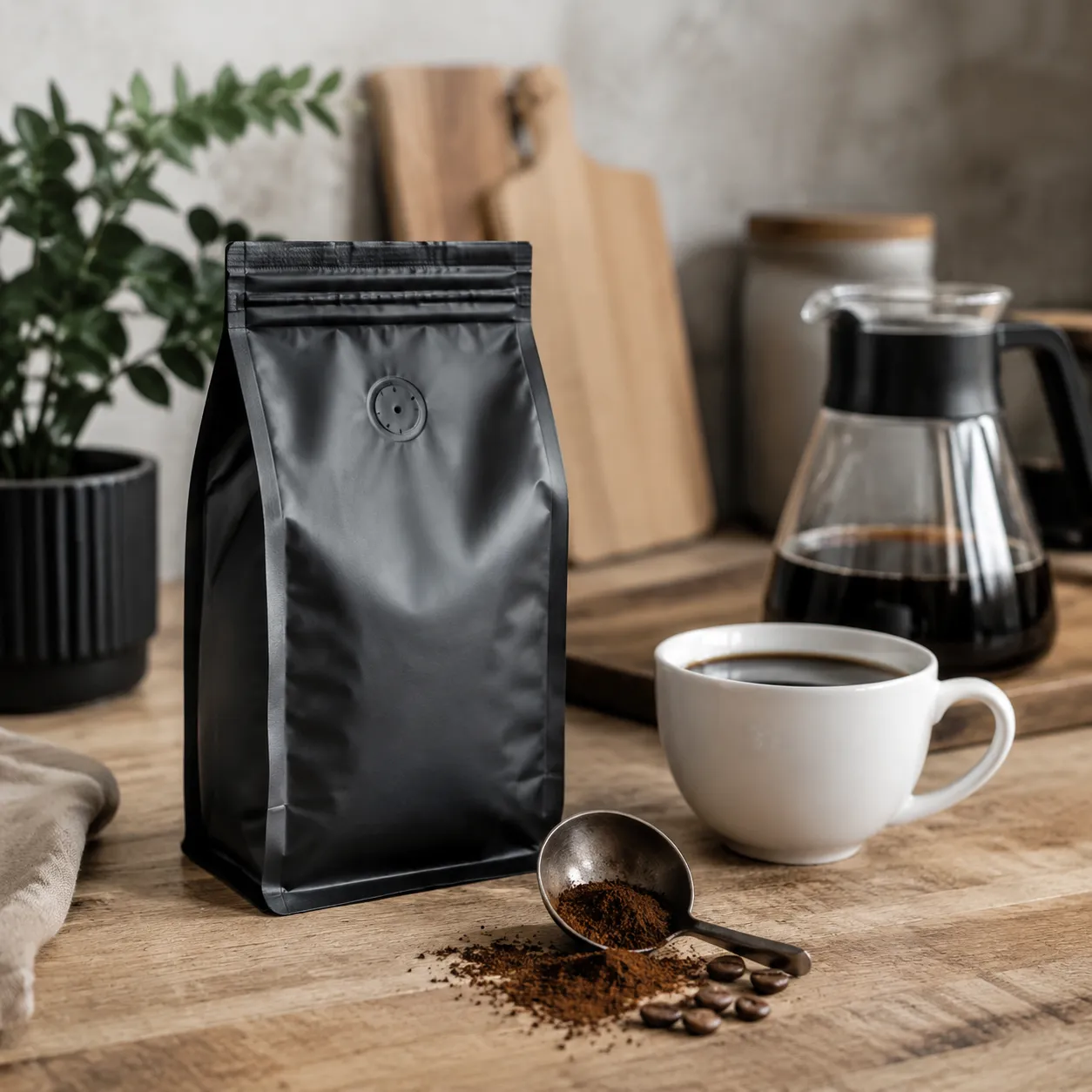
When you buy a standard bag of coffee, the total yield depends entirely on how large your favorite mug is and how strong you like your brew. For most coffee lovers, calculating the exact output helps manage their weekly supply.
Based on average consumer habits and a standard brewing ratio, here is exactly how many cups of coffee in a 12 oz bag you can expect to get:
| Mug Size | Estimated Yield Per 12 Oz Bag | Best Suited For |
|---|---|---|
| Small 6 oz Cup | ~32 cups | Traditional tasting cups and specialty espresso drinks |
| Standard 8 oz Mug | ~24 cups | The baseline industry standard for home drip brewers |
| Large 12 oz Mug | ~16 cups | The average daily home or office pour |
| Travel Mug (16 oz) | ~12 cups | On-the-go tumblers and large travel thermoses |
- Small 6 oz Cups: Traditional coffee cups or tasting mugs maximize your bag, stretching your supply to around 32 servings.
- Standard 8 oz Mugs: This is the baseline golden ratio benchmark. A 12 oz bag of whole bean or ground coffee comfortably yields about 24 standard cups.
- Large 12 oz Mugs: If you prefer a larger morning pour at your desk, your yield drops to about 16 cups per bag.
- Travel Mugs / 16 oz Tumblers: For heavy commuters filling up large insulated travel mugs, a single bag provides roughly 12 full servings.
Knowing these numbers helps you plan your inventory. If you are a roaster selling to everyday consumers, understanding coffee bag sizes and their real-world yields ensures you can guide your customers toward the right purchase frequency.
Crucial Variables: Why Your Total Cup Count Changes
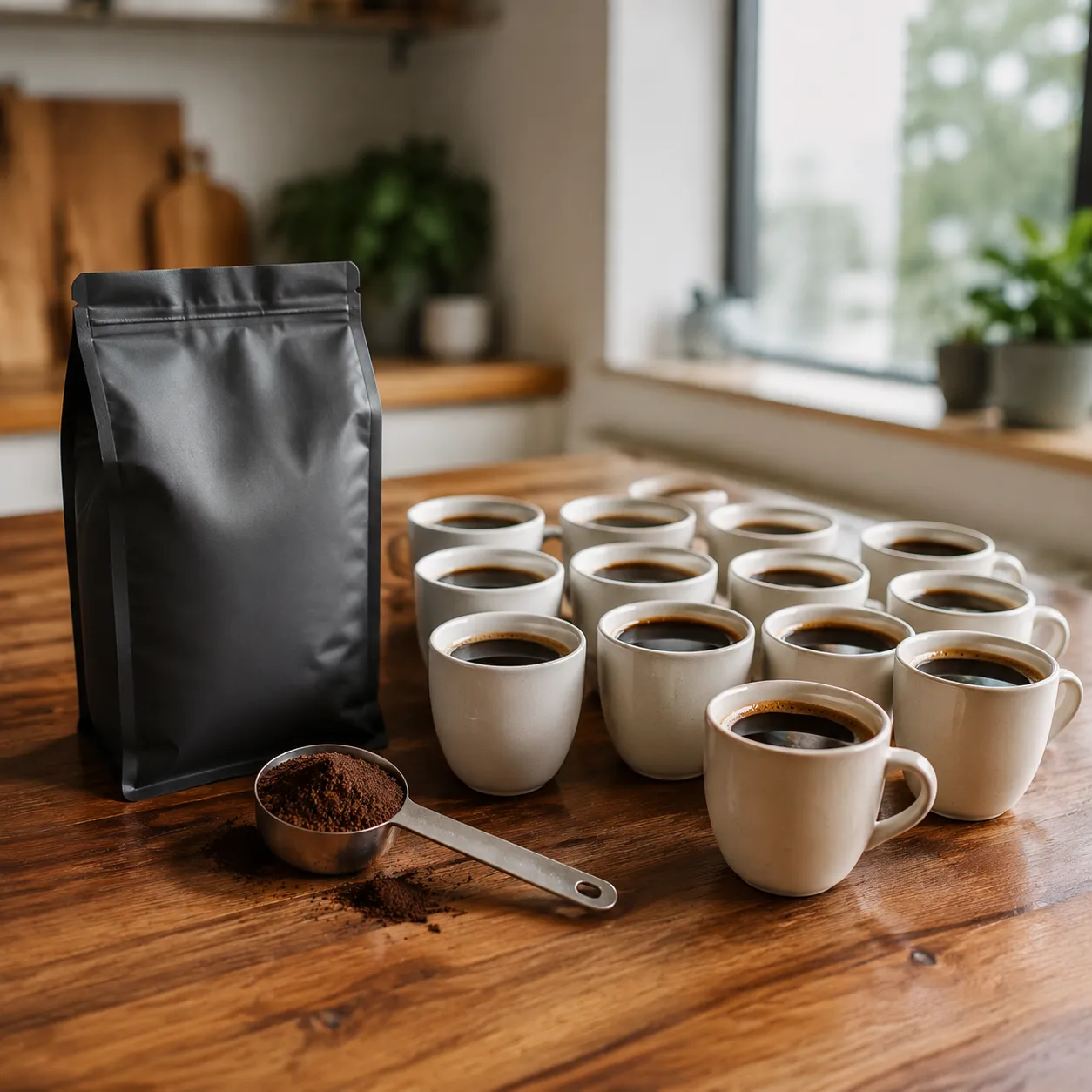
The exact number of cups of coffee in a 12 oz bag isn’t set in stone. How you brew, measure, and grind your beans directly impacts your final yield. To get the most out of your inventory, understanding the mechanics of extraction is essential.
The Golden Ratio and Your Brewing Method
The coffee-to-water ratio—often referred to as the Golden Ratio—is the biggest variable altering your cup count. A standard specialty ratio sits around 1:16 (one gram of coffee for every 16 grams of water). Shifting this ratio to favor a stronger or weaker brew entirely changes how fast you run through a 12 oz bag.
- Pour-Over and Automatic Drip: These standard consumption methods generally stick closest to the Golden Ratio. Utilizing a clean, filtered extraction, you can consistently expect the standard 16 to 24 cups per bag.
- French Press: Immersion brewing usually requires a coarser grind and a tighter 1:15 ratio. Because the grounds absorb more water and require a higher dry weight per volume to achieve a robust body, French press brewing yields fewer total cups per bag.
- Espresso: Espresso relies on highly concentrated extraction shots rather than high-volume extraction. While a single shot uses only about 7 to 10 grams of coffee, modern cafes routinely pull double shots using 18 to 22 grams. If you strictly drink double espressos, your 12 oz bag will yield roughly 15 to 18 drinks.
Whole Bean vs. Pre-Ground Volumetrics
Measuring by volume (using scoops) rather than mass (using a digital scale) introduces massive consistency issues. Whole bean coffee takes up far more physical space than pre-ground coffee due to the air pockets between the beans. Furthermore, different roast profiles alter bean density; dark roasts are larger and lighter, while light roasts are smaller and heavier.
Pro Tip: Always measure your ground coffee weight in grams with a digital scale. Relying on tablespoons or scoops causes massive fluctuations in your daily coffee-to-water ratio, meaning you might unexpectedly run out of your beans days ahead of schedule.
When managing a roasting business, understanding these consumer brewing habits helps you choose the right packaging solutions. Adapting to how customers use your product is just as vital as understanding the coffee industry 3 size standard to ensure your bags fit standard kitchen scales, storage canisters, and retail shelves perfectly.
Why the 12 Oz Bag is the Universal Coffee Industry Standard
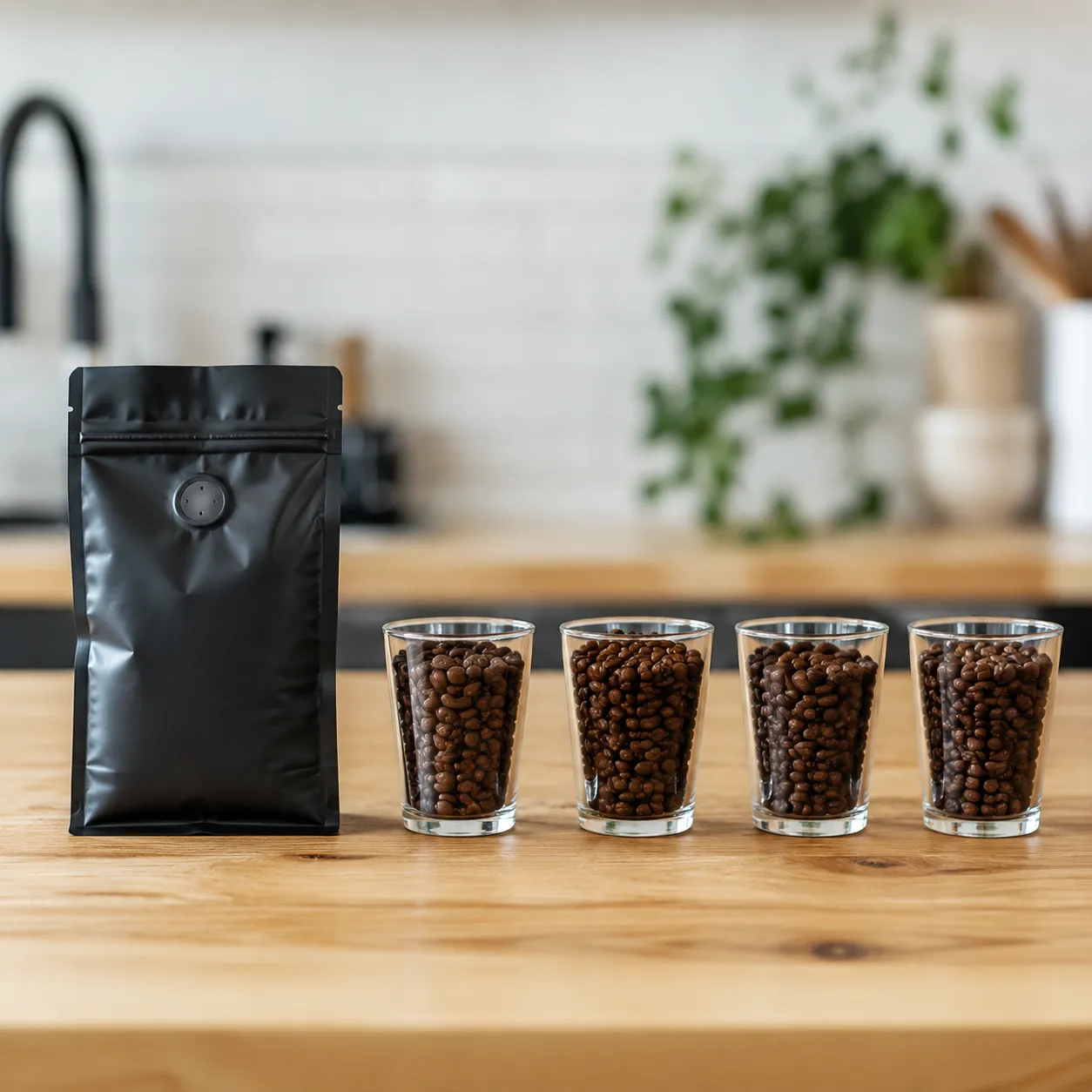
When considering how many cups of coffee in 12 oz bag you can expect, it is worth looking at why this specific size dominates the market. The 12 oz (340g) weight is not an arbitrary number; it represents the ultimate sweet spot for maintaining peak coffee bean freshness. Once a bag is opened, exposure to oxygen rapidly degrades the delicate flavor compounds of whole bean coffee. A 12 oz volume ensures the average consumer finishes the coffee within two weeks—the exact timeline before oxidation noticeably compromises the taste profile.
From a retail and e-commerce perspective, this standard footprint optimizes logistics. The dimensions fit perfectly on standard grocery shelves and maximize space inside shipping boxes, reducing fulfillment costs for specialty coffee roasters. For brands planning their product lines, selecting the right dimensions is critical. You can explore the industry dimensions further in our guide to the standard coffee bag size to see how this volume translates to physical packaging efficiency.
Maximizing Freshness: Choosing the Right 12 Oz Packaging Structures
Getting all 24 fresh cups out of your 12 oz bag of coffee depends entirely on the design of the pouch. If the packaging fails, your beans oxidize, turning a premium roast flat and stale before you can even finish the bag. Protecting that flavor requires specific structural engineering.
- The One-Way Degassing Valve: Freshly roasted coffee releases carbon dioxide. A premium one-way degassing valve allows this trapped gas to escape without letting oxygen inside, preventing the bag from bloating or bursting.
- High-Barrier Material Layering: True freshness requires a multi-layer barrier. Combining layers of PET, aluminum foil, or high-barrier PE shields the volatile coffee oils from moisture, UV light, and aroma loss.
- Functional Reclosability: Flavor preservation shouldn’t stop after opening the bag. Utilizing a precision resealable zipper closure or a pocket zipper creates an airtight seal for daily home use, extending the lifespan of your whole bean coffee.
| Packaging Feature | Primary Benefit | Impact on Cup Quality |
|---|---|---|
| Degassing Valve | Discharges $CO_2$ | Prevents oxidation and stale flavors |
| High-Barrier Layers | Blocks UV, oxygen, and moisture | Preserves original roast profile and aroma |
| Resealable Zipper | Re-creates an airtight seal | Maintains freshness for all 24 cups |
Premium 12 Oz Coffee Bag Styles for Specialty Roasters
When considering how many cups of coffee in 12 oz bag packages your customers can brew, the shelf presentation and bag structural integrity matter just as much as the beans inside. As a premier manufacturer, we offer three foundational bag styles tailored for specialty coffee roasters to protect freshness and elevate brand identity.
| Bag Style | Best For | Key Structural Advantage |
|---|---|---|
| Stand-Up Pouches (Doypack) | Retail shelves & startup brands | Bottom-gusset efficiency and maximum visual impact |
| Flat-Bottom Bags (Box Pouches) | Premium specialty lines | Maximum stability with 5 printable surfaces for storytelling |
| Side-Gusseted Bags | Traditional roasters & bulk storage | Compact storage options and classic aesthetic |
Stand-Up Pouches (Doypack)
The standard Doypack is a favorite for showcasing a 12 oz coffee bag on crowded retail shelves. The bottom-gusset design allows the pouch to stand firmly once filled, maximizing front-facing billboard space. Utilizing custom stand-up pouch coffee bags provides an exceptional balance of material efficiency and shelf presence for any growing coffee brand.
Flat-Bottom Coffee Bags (Box Pouches)
Also known as box pouches, flat-bottom coffee bags represent the pinnacle of premium packaging. They combine the best features of a side-gusseted bag and a stand-up pouch. With a completely flat base, these bags offer unmatched stability and will not tip over. They provide five distinct panels for branding, allowing you to utilize the sides and back for brewing instructions, origin stories, and detailed guides on how to calculate the perfect coffee-to-water ratio.
Side-Gusseted Bags
For traditional roasters looking for a classic, tight look, side-gusseted bags are the ideal solution. These bags expand on the sides when filled and are typically sealed by folding over the top. They offer compact storage options that fit perfectly in shipping boxes and tight retail displays, making them an enduring staple in the global coffee market.