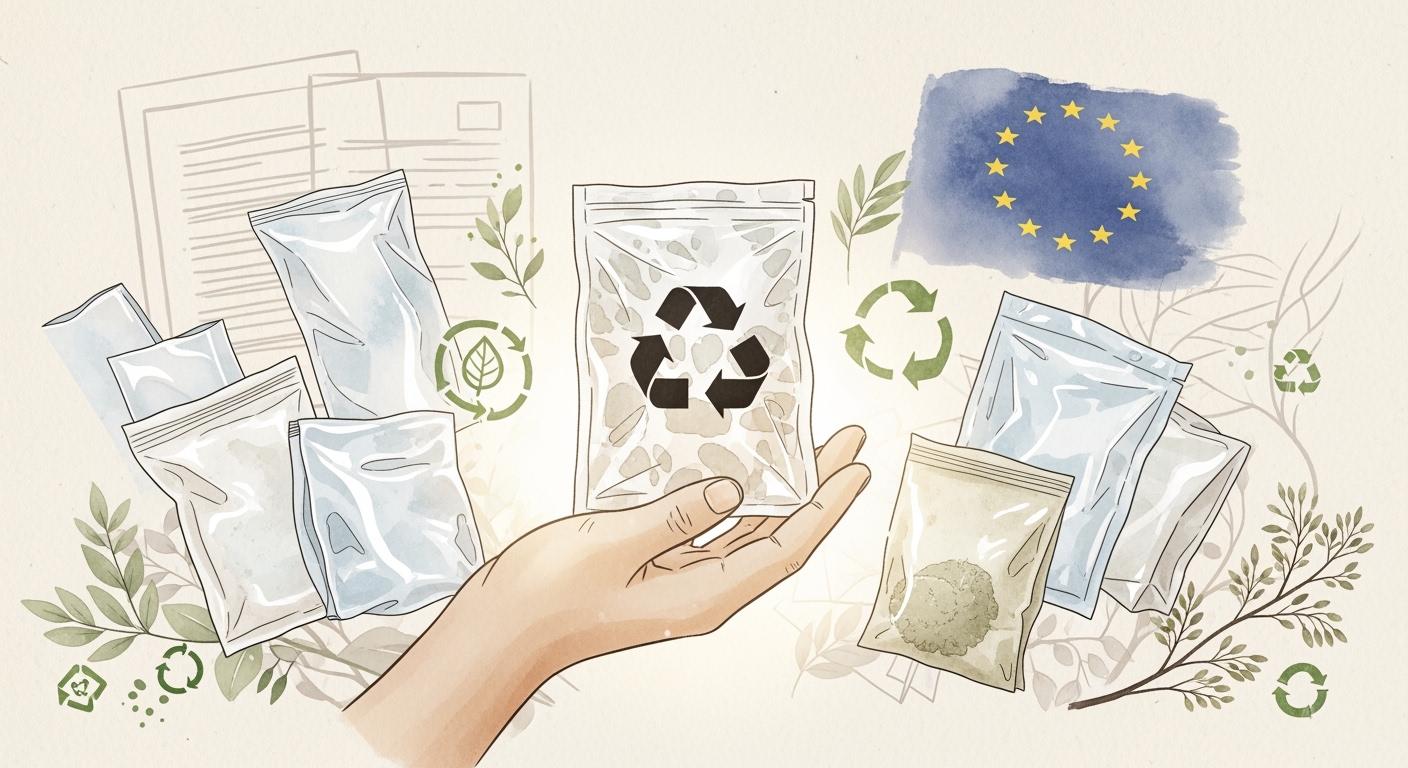
The EU Packaging Waste Regulation (PPWR) 2026 will change how you make, use, and handle flexible packaging. If you sell packaging in the EU or want to, you will have to follow new rules that affect your business right away. Both EU and non-EU companies like BN PACK must move quickly to keep selling and stay ahead.
The flexible packaging market is getting bigger, especially in the EU, because more people care about the environment and want better choices.
You need to know these targets for the EU:
Target Type | Target Details |
|---|---|
Packaging waste reduction | 5% by 2030, 10% by 2035, 15% by 2040 |
Reusable secondary packaging | 40% reusable by 2030, 70% by 2040 |
Recycled content | 35% for secondary packaging by 2030, 30% for primary packaging |
Single-use packaging ban | Ban on single-use plastic packaging for fresh products under 1.5 kg from 2030, with exemptions |
You should think about the risks and chances:
Opportunities | Risks |
|---|---|
Infrastructure modernization | Currency instability |
Localized manufacturing | Long receivable cycles |
Financing/leasing models | Fragmented logistics |
Start by checking your packaging, your suppliers, and if you follow EU rules. You need to get ready now to meet the EU Packaging Waste Regulation and keep your business safe.
EU Packaging and Packaging Waste Regulation Overview
Scope and Key Changes
The new EU packaging regulation will bring many changes. All packaging sold in the EU must follow these rules. This includes flexible packaging, food packaging, and packages for online shopping. Every EU country must obey this law. The rules are the same for everyone selling in the EU.
The regulation starts in August 2026.
By 2030, all packaging must be recyclable.
There are goals to cut packaging waste by 5% in 2030, 10% in 2035, and 15% in 2040.
The law makes one set of rules for all packaging.
Online stores and supply chain companies must follow these rules too.
The regulation wants the supply chain to be clear and better for the planet.
There will be tougher rules for dangerous chemicals in packaging.
Here is a table that shows the main changes for flexible packaging:
Key Change | Description |
|---|---|
Mandatory Recycled Content | You have to use some recycled materials in your packaging. |
Recyclability Thresholds | All packaging must be easy to recycle by 2030. |
Labeling Requirements | Labels must tell what the material is, if it can be recycled, and how to sort it. |
Producer Responsibility | You need to help with reuse and refill systems, especially for food and drinks. |
Limits on Hazardous Substances | Stricter rules for chemicals like PFAS and heavy metals start in August 2026. |
Objectives and Circular Economy Goals
The main goal is to help the environment and support a circular economy. You should make packaging that uses less material and makes less trash. The regulation wants you to:
Cut down on packaging waste by using less and making smarter designs.
Use more recycled and reusable packaging.
Stop using harmful stuff and switch to compostable or recyclable choices.
Follow the same recycling rules in every EU country.
Take care of your packaging from start to finish.
Timeline and Implementation
You need to get ready for the new EU packaging rules now. The rules begin in August 2026. By 2030, all packaging must be recyclable. You must reach waste reduction goals in 2030, 2035, and 2040. The regulation gives you clear dates, so you can plan your steps.
Tip: Work with your suppliers and change your packaging designs early. This will help you be ready and avoid problems at the last minute.
PPWR Regulation Requirements for Flexible Packaging
Recyclability and Design Standards
You have to follow tough recyclability rules in the ppwr regulation. There is a minimum recyclability level for all flexible packaging. You must make your packaging easy to recycle. The materials you pick and how you build your packaging matter a lot. You should not use harmful substances like PFAS, especially in food packaging.
BN PACK has flexible packaging that meets these rules. You can pick recyclable materials and smart designs to help recycling. The packaging waste regulation says you must use less material and make lighter packaging. You also need clear labels to show what the material is and how to recycle it.
Here is a table that shows the main design and recyclability requirements:
Requirement Type | Details |
|---|---|
Requirements for substances in packaging | Food-contact packaging must be free of PFAS under PPWR chemical safety requirements. |
Recyclable packaging | All packaging must be designed for material recycling and meet the criteria defined under EN 13430. |
Minimum recycled content | By 2030: 10% for other contact-sensitive plastics; 35% for all other plastic packaging. By 2040: 25% for other contact-sensitive plastics. |
Compostable packaging | Permitted for specific items like tea bags and must fully biodegrade according to EN 13432. |
Packaging minimization | Must be reduced to the minimum weight and volume necessary by January 1, 2030. |
Clear harmonized labels | Must carry a harmonized label indicating material composition starting August 12, 2028. |
You need to design for recycling and use flexible materials that help recycling. BN PACK uses monomaterial films and eco-friendly inks to support recycling.
Recycled Content and Material Mandates
The packaging waste regulation sets rules for recycled content in flexible packaging. You must use recycled content to meet the ppwr requirements. By 2030, you need 35 percent recycled content in most plastic packaging. This goes up to 65 percent by 2040 for plastic stretch films and strapping bands.
By 2030 at the latest, the following percentages of recycled material must be present: 35% in all other plastic packaging except those mentioned above.
BN PACK helps you reach these goals with packaging made from recycled materials. You can pick flexible packaging with high recycled content. This helps both recycling and sustainability. The regulation also says you must use safe and easy-to-recycle materials.
You need to check your supply chain and make sure you use the right recycled content. BN PACK has flexible solutions with certified recycled materials that meet global standards.
Reuse, Reduction, and Labeling Rules
You must follow reuse targets under the packaging waste regulation. The ppwr regulation says 40 percent of flexible packaging must be reusable by January 1, 2030. You need to design packaging that is easy to refill or return. Some things like pallet wrapping film and plastic strapping do not have to be 100 percent reusable. You can focus on the main target for flexible packaging.
You also need to make your packaging lighter and smaller. The regulation says you must use less packaging by January 1, 2030. BN PACK has flexible packaging that uses less material and helps you meet reduction goals.
You must use clear labels to show the material and recycling steps. Starting August 12, 2028, you need harmonized labels on all flexible packaging. These labels help people sort and recycle packaging the right way. BN PACK gives you flexible packaging with clear labels and simple instructions.
Extended Producer Responsibility (EPR)
You must follow extended producer responsibility rules in the packaging waste regulation. The ppwr regulation says you must join a Producer Responsibility Organization (PRO). You need to report your packaging data, like type, weight, eco features, and recyclability. You must pay fees based on how much packaging you use and how green it is. These fees help pay for recycling and education.
BN PACK helps you with extended producer responsibility by giving you packaging with full traceability and compliance papers. You can use flexible packaging that meets all reporting and fee rules. BN PACK’s flexible solutions help you follow the packaging waste regulation.
Here is a table that shows the main extended producer responsibility requirements:
Requirement | Description |
|---|---|
Join a Producer Responsibility Organization (PRO) | A nonprofit industry association managing compliance for producers. |
Report packaging data | Producers must report the type, weight, eco characteristics, and recyclability of their packaging. |
Pay fees | Fees are based on packaging volume and sustainability profile, funding recycling and education efforts. |
You must design for recycling, use flexible materials, and follow all extended producer responsibility rules. BN PACK’s flexible packaging helps you meet these rules and stay ahead in the EU market.
Impact on Flexible Packaging Manufacturers: BN PACK Perspective
Monomaterial and Multilayer Shifts
You have to think again about what materials you use. The PPWR regulation wants you to pick monomaterial packaging. Monomaterial is easier to recycle than other types. Many companies are stopping the use of multilayer packaging. This is mostly for products that do not need strong barriers. Using monomaterial helps you reach recycling goals and avoid fines.
Right now, only a small amount of flexible plastic packaging gets recycled. The EU wants you to recycle more.
Many brands are using less multilayer material. This change might slow down some high-barrier packaging uses.
New technology lets you make multilayer packaging that is safer and better for the planet.
BN PACK gives you advanced monomaterial films and new multilayer options. These choices help you keep your packaging safe and good for the environment.
Compostable and Biodegradable Claims
You must follow strict rules if you say your packaging is compostable or biodegradable. The PPWR regulation says you need to use certified standards for these claims. You cannot say your packaging is compostable without proof.
2026 will be a big year for the packaging industry. Companies cannot ignore their responsibility for the planet anymore, because PPWR starts on August 12.
For a long time, companies talked about being green. They did not have to show proof, but now things are changing.
The new rules check all claims on packaging. If you do not follow the rules, you can get in trouble. You cannot just say your packaging is green. You must prove it.
Here is a table of compostability standards you must follow:
Region | Standard | Description |
|---|---|---|
Europe | EN 13432 | European standard for compostability |
North America | ASTM D6400 | For industrial composting |
North America | ASTM D6868 | For compostable plastics in packaging |
Australia/New Zealand | AS 5810 | For home compostability |
BN PACK has packaging that meets EN 13432 and other world standards. This means you can make claims with confidence.
Compliance Documentation and Traceability
You must keep good records and track every step of your packaging process. The PPWR regulation says you need to write down your materials, recyclability, and chemical safety. You also need to use special labels and digital codes, like QR codes. These help people recycle and link to the EU’s Digital Product Passport system.
Regulation Area | PPWR Requirement Summary | Impact |
|---|---|---|
PFAS Ban | Food-contact packaging must not go over PFAS limits. | You must use safer materials. |
Recyclability by Design | All packaging must be recyclable by 2030. | You need to use monomaterial packaging. |
Unified Labeling & Digital Data Carriers | Use the same icons and QR codes for recycling. | You must link to the Digital Product Passport. |
BN PACK helps you with ISO9001 and BRC-certified production, full tracking, and all needed papers. You can trust BN PACK to help you follow every EU packaging rule.
EU Packaging Regulation: What It Means for Food and Coffee Brands
Risks of Not Following the Rules
If you do not follow the packaging waste regulation, you face big risks. The EU will check your packaging to see if it is safe and recyclable. If your packaging does not meet the rules, you might not be able to sell in the EU. Customs can stop your products at the border. You must show proof that your packaging is safe and can be recycled. The PPWR regulation says you need to give technical documents. Inspectors will look at your packaging materials and labels very closely.
Here is a table with the main risks:
Risk of Non-Compliance | Description |
|---|---|
Market Access Restrictions | Products can be stopped at borders, so you cannot sell in the EU. |
Burden of Proof | You must give documents to show you follow the rules, especially for PFAS. |
Increased Scrutiny | The EU will check your packaging for recycling and safety. |
All packaging must be recyclable by August 2026.
Inspectors will check your packaging and may give penalties if you do not follow the rules.
BN PACK helps you avoid these risks. You get packaging waste solutions that meet EU standards and help you keep selling in the EU.
Changing Packaging Designs and Supply Chains
You need to change your packaging designs and supply chain to follow the new rules. The regulation says you must use recyclable materials and make less packaging waste. You must remove PFAS and other banned substances from food packaging. You also need correct labels and certifications from your suppliers.
Here is a table showing what you must do:
Requirement | Action Needed |
|---|---|
PFAS Limits | Make sure packaging does not have PFAS or stays under strict limits. |
Material Safety | Remove banned substances and do not make false green claims. |
Basic Design | Use packaging that does not stop recycling or recovery. |
You can follow these steps:
Test for PFAS or get proof from your suppliers.
Check the safety of all packaging materials.
Collect certifications from your suppliers.
Check all environmental claims on your packaging.
BN PACK gives food and coffee brands packaging that is good for the planet. You can pick recyclable pouches, compostable bags, and packaging with clear labels. BN PACK’s packaging helps you follow EU rules and show you care about the environment. You get a selling point by using less packaging and eco-friendly materials.
Here is a table showing what this means for your brand:
Implications | Challenges | Opportunities |
|---|---|---|
Move to recyclable materials | Higher costs to follow the rules | Sustainability as a selling point |
Smaller packaging sizes | Harder registration steps | Digital printing advantage |
Correct labeling for compliance | Learning new materials | Making your brand ready for the future |
You can use BN PACK’s packaging solutions to stay ahead. You protect your market access and build trust with customers who care about the planet.
Compliance Strategies for 2026: BN PACK Solutions
Transitioning to Recyclable Flexible Packaging
You should start making your packaging recyclable soon. The EU packaging regulation has clear rules for what is recyclable. You must design packaging that is easy to collect and recycle. BN PACK helps you by offering many recyclable flexible packaging choices. You can pick stand-up pouches, flat-bottom bags, and film rolls made from monomaterial films. These materials make recycling easier and help you follow the new rules.
Here is a table showing main strategies to get ready for the packaging waste regulation:
Strategy | Details |
|---|---|
Packaging minimization | Reduce packaging weight and volume as much as possible by 2030. |
Empty-space limits | Make sure empty space does not go over 50% by 2030. |
Recyclability requirements | Design packaging so it can be collected and sorted for recycling by 2030. |
You can work with BN PACK to check your packaging. BN PACK’s experts help you use less material and avoid extra layers. You also get help picking the right materials and making sure your packaging meets all recyclability rules.
Tip: Try new packaging designs early. This gives you time to fix problems and meet the EU packaging regulation before the deadline.
Increasing PCR Content and Certification
You must use more post-consumer recycled (PCR) content in your packaging to follow the packaging waste regulation. BN PACK offers flexible packaging with high PCR content. You can pick pouches and films made with recycled plastics that keep your products safe and fresh.
Here are some best practices to help you increase PCR content and meet PPWR 2026:
Start designing for recycling right away.
Add more PCR plastics into your packaging.
Use mono-materials to make recycling easier.
Minimize ink coverage on paper and board.
Choose adhesives that work well with recycling.
Avoid extra layers and finishes that make recycling hard.
Use PCR materials to support a circular economy.
Make sure your PCR solutions are certified and meet EU standards.
BN PACK helps you with certified PCR packaging. You get full documents to show your packaging meets the latest EU packaging regulation. This helps you keep selling in the EU and shows your customers you care about the planet.
Note: Using more PCR content helps you follow the rules and makes your brand look eco-friendly.
Working with Certified Suppliers
You need to work with suppliers who can prove their packaging meets all the rules. The packaging waste regulation says you must keep good records and have the right certifications. BN PACK gives you all the documents you need for compliance. You get packaging with certifications for recyclability, compostability, and reuse.
Here is a table of the main certifications you should look for:
Certification Type | Description |
|---|---|
Declaration of Conformity (DoC) | Shows each packaging item follows the regulations. |
Technical Documentation | Extra documents that regulators may ask for at any time. |
Certifications for Recyclability | Proof from recognized bodies that your packaging can be recycled. |
Certifications for Compostability | Proof that your packaging can be composted according to standards. |
Certifications for Reuse | Evidence that your packaging can be reused safely and effectively. |
Life Cycle Assessment (LCA) | Data on how your packaging affects the environment. |
BN PACK’s ISO9001 and BRC-certified factory makes sure you get packaging that meets strict quality and safety standards. You can trust BN PACK to help you keep all your compliance documents up to date. This makes audits and inspections much easier.
Working with certified suppliers like BN PACK gives you peace of mind. You know your packaging meets every part of the EU packaging regulation and helps you stay ahead of the competition.
By following these strategies, you can get ready for PPWR 2026 and keep your business strong in the EU market. BN PACK is ready to help you with expert advice, certified products, and full compliance support.
Common Misconceptions About PPWR Regulation
Recyclability and Compostability Myths
Some people say flexible packaging under PPWR is not good. They think using sustainable packaging means you lose quality or looks. This is not right. You can have strong and green packaging at the same time. You do not have to give up good performance to help the planet.
Many people believe compostable packaging breaks down anywhere. But compostable packaging needs special places to break down. Most places in nature do not have these conditions. The PPWR regulation says recycling is most important. Recycling helps the circular economy and lets you use materials again. By February 2028, only some packaging can be used for industrial composting. You must check if your packaging follows these rules.
Here are some myths people believe:
Sustainable packaging is always lower quality.
Compostable packaging works in all places.
Compostable packaging is always better than recyclable packaging.
You should focus on making packaging easy to recycle. Compostable packaging can only be used in some cases under PPWR. Recycling helps you reach your goals and keeps materials in use.
Timeline and Exemption Misunderstandings
Some people think PPWR starts in January 2030. The rules start on August 12, 2026. You must follow limits for PFAS and heavy metals right away. You need a Declaration of Conformity to show your packaging is safe.
Some companies think their packaging does not have to follow the rules. You should not guess. Always check if your packaging is really exempt. If it is not, you must get ready to follow the rules.
Many people wait for the final rules before they act. Do not wait. Start getting ready now. Some rules start as soon as August 2026. You must check your packaging very carefully. The circular economy needs you to act early and follow the rules.
Here are some things people get wrong:
The rules start in 2030.
All packaging gets exemptions.
You can wait for the final rules before you prepare.
You should start now. Acting early helps you meet all PPWR rules and stay ahead.
You need to start getting ready for PPWR 2026 right now. First, use mono-material designs for your packaging. Make your tracking systems better so you know where everything is. Planning early helps you stay out of trouble and keeps your business looking good. You can help the planet by picking recyclable materials and keeping track of your packaging. It is smart to ask experts for help with audits and look at BN PACK’s ideas.
Working with your supply chain early helps you do better than others and reach your green goals.
Next Step | Benefit |
|---|---|
Conduct compliance audit | Find what you need to fix and improve |
Connect with advisors | Make reporting easier |
Make sure you follow all the rules |