
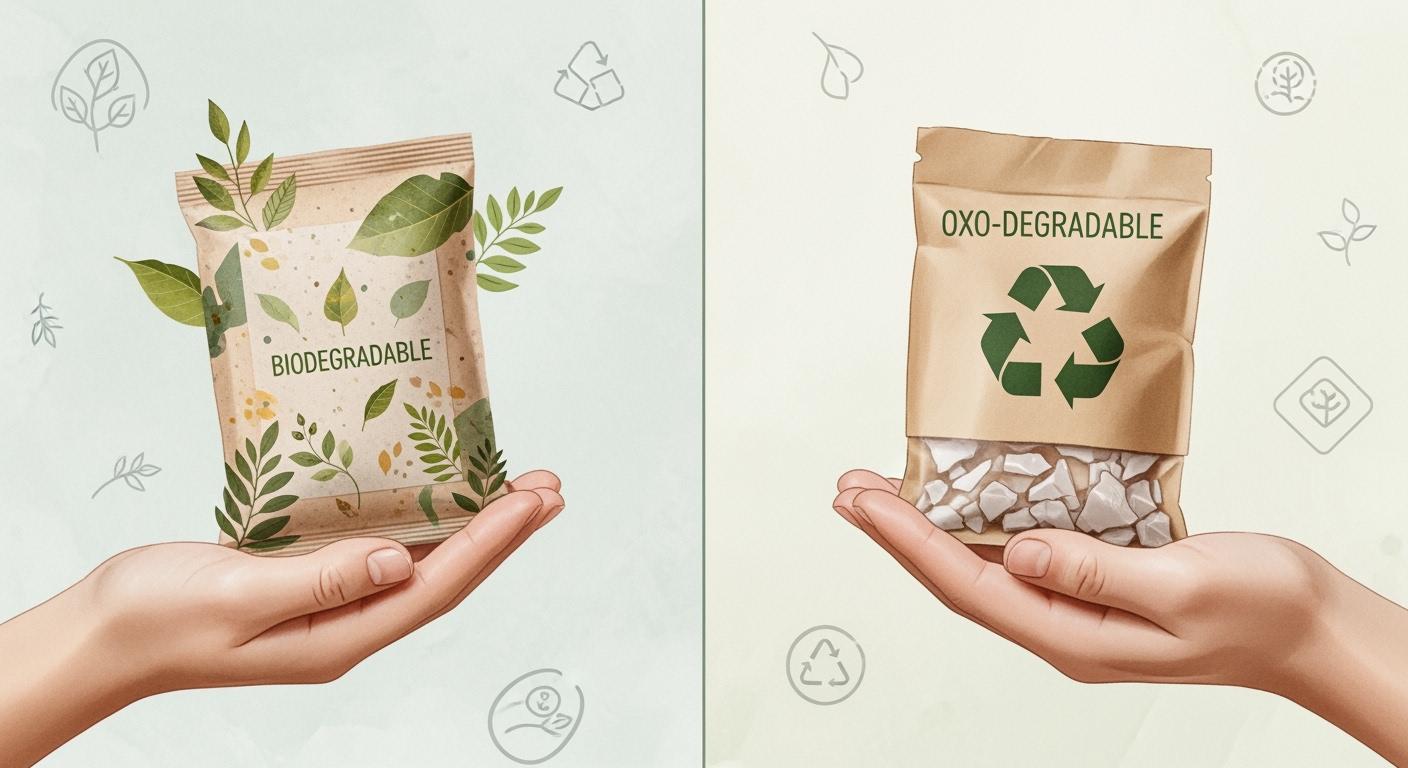
You may feel confused when picking packaging for your business. Many products say they are biodegradable or oxo-degradable, but these words can trick you. If you buy packaging or check rules, you need clear facts to keep your brand safe. Studies show people want packaging that is good for the planet. Many people do not trust oxo-degradable claims. Biodegradable Packaging is special because buyers want real ways to help the earth. Which type of packaging really fits your needs for rules and the planet?
Biodegradable Packaging Explained
What Is Biodegradable?
Many products say they use biodegradable packaging. This means the material can break down with help from living things like bacteria and fungi. The process is called biodegradation. It happens in steps. First, the material breaks into smaller pieces. Then, microbes eat these pieces. After that, the pieces turn into water, carbon dioxide, and other natural things. This is how organic matter breaks down in nature.
BN PACK’s biodegradable bags are made from plants. These bags are strong and dependable. They are made to break down safely in nature. You can trust these bags to help your business be greener.
Process Stage | Description |
|---|---|
Initial Steps | Both living and non-living things start breaking down the polymer. |
Enzymatic Action | Microorganisms eat the fragments and finish breaking them down. |
Composting Conditions | The material must follow rules, like no heavy metals or leftover plastic bits. |
Composting Methods
Composting helps biodegradable packaging break down faster. There are two main ways: home composting and industrial composting. Home composting happens in your yard. Industrial composting takes place in big centers with heat and moisture. Compostable plastics need these special places to turn into compost.
Compostable packaging turns into rich soil and does not leave harmful stuff. Biodegradable packaging can also break down, but it may take longer and sometimes leaves small bits. Compostable plastics, like those in certified compostable bags, need the right mix of heat, moisture, and microbes. For best results, choose certified compostable packaging.
Aspect | Biodegradable Packaging | Compostable Packaging |
|---|---|---|
Environmental Impact | May leave harmful leftovers and take longer to break down | Turns into healthy compost without toxic leftovers |
Efficiency | Breaks down in many places, but may be slow | Needs special conditions for fast breakdown, often in big compost centers |
Certification Standards
Always check for certification when picking biodegradable packaging. Certifications like EN 13432 and ASTM D6400 show the product follows strict rules for breaking down and composting. Certified compostable packaging must break down fully, leave no harmful leftovers, and pass tests for plant safety.
Here is how the main certifications work:
Certification Standard | Requirements | Certification Process |
|---|---|---|
EN 13432 | Must break down, fall apart, leave no harmful leftovers, and have limits on heavy metals | Material checked first, tested in labs, reviewed, and certificate given |
ASTM D6400 | Must break down quickly, fall apart, make good compost, and have limits on leftovers | First checked, tested quickly, checked by others, and logo given |
BN PACK’s biodegradable and compostable bags meet these rules. You can feel sure you are using certified compostable packaging that helps your brand care for the planet.
Oxo-Degradable Plastics Overview
Additive-Based Plastics
Oxo-degradable means the plastic has special chemicals added. These plastics look just like normal plastic. Makers add things called pro-oxidants or pro-degradents. These are often metal salts, like iron or nickel. When sunlight, heat, or air touch the plastic, the chemicals react. This reaction breaks the plastic into smaller pieces.
Oxo-degradable plastics use chemicals to break down faster.
Sunlight, heat, and air help these plastics break apart.
The plastic does not turn into natural things right away.
Fragmentation vs Biodegradation
Fragmentation and biodegradation are not the same. Oxo-degradable plastics break into tiny bits called microplastics. The chemicals make the plastic split into small pieces. Biodegradation means microbes eat the material. They turn it into water, carbon dioxide, and biomass. Oxo-degradable plastics do not fully break down in nature. They only become small bits that stay for a long time.
Oxo-degradable plastics break into small pieces but do not vanish.
Biodegradable plastics can break down fully with microbes.
Microplastics from oxo-degradable plastics can pile up in nature.
Environmental Risks
Oxo-degradable plastics can cause harm to the earth. When they break into microplastics, they can pollute water and soil. Microplastics can pick up bad chemicals and move them around. This can hurt animals and people. Experts worry about microplastics in oceans and rivers. Some biodegradable plastics can also make microplastics if they do not break down right. Weather and sunlight can make this problem worse.
Microplastics from oxo-degradable plastics can hurt sea animals.
These tiny bits can carry harmful chemicals.
Many countries are banning oxo-degradable plastics to keep nature safe.
Always check if your packaging is truly biodegradable and safe. This helps you make good choices for your business and the planet.
Regulatory Actions and Bans
EU and Global Restrictions
Many countries have stopped using oxo-degradable plastics. These bans help protect nature and stop pollution. The European Union banned them in 2019 with the Single-Use Plastics Directive. France banned them in 2015. Spain and Italy made rules stricter about fake biodegradable claims. The United Kingdom does not want oxo-degradable plastics, and big stores do not use them anymore. The United Arab Emirates first liked these plastics but later worried about their effects. Canada added oxo-degradable plastics to its rules for cutting plastic waste.
European Union – Banned by the Single-Use Plastics Directive (2019)
France – Banned since 2015
Spain & Italy – Made rules tougher for fake “biodegradable” claims
United Kingdom – Government says not to use; big stores stopped using them
United Arab Emirates – Supported at first, then worried about pollution
Canada – Added to plastic waste reduction rules
Regulators say oxo-degradable plastics are not good for the earth. They break into microplastics instead of disappearing. Microplastics make pollution worse and hurt nature. The EU ban started on July 3, 2021, because of worries about microplastics. The main reason is to stop pollution from tiny plastic bits.
Implication | Description |
|---|---|
Shift to Alternative Materials | Companies must use new materials that follow rules. This changes how they get and make products. |
Impact on Distribution Processes | New materials can change how products are shipped and delivered. |
Sustainability Goals | Businesses must meet green goals to avoid problems with rules. |
Microplastics and Greenwashing
You should be careful about packaging claims. Some companies call oxo-degradable plastics “green” without proof. They use unclear words and wrong labels. Some products say they help the earth but still pollute. Companies sometimes lie about certifications. These fake claims make pollution worse and confuse buyers.
Not clear about how products are made
Claims about being “green” or recycled often have no proof
Words like “green” used without meaning
Claims that do not matter, like “CFC-free”
Products sold as better than others but still bad
Lying or bluffing about what products can do
Wrong labels about certifications
You should check certifications and rules before picking packaging. This keeps your brand safe and helps stop pollution. Bans make companies use safer materials and help keep the earth clean.
Comparing Biodegradable vs Oxo-Degradable
Breakdown Process
It is important to know how each packaging breaks down. Biodegradable packaging uses tiny living things to break apart. These microorganisms eat the material. They change it into water, carbon dioxide, and biomass. This can take a few months or even years. The time depends on where the packaging is left. This process is part of nature and helps the earth.
Oxo-degradable packaging works in a different way. Makers add chemicals to normal plastic. Sunlight, heat, and air start the breakdown. The plastic splits into very small pieces called microplastics. These pieces do not go away. They stay in nature for a long time.
Here is a simple table to help you compare:
Type of Packaging | Breakdown Process | Environmental Impact | Certification & Legal Status |
|---|---|---|---|
Biodegradable | Breaks down naturally with microorganisms; time varies from months to years. | Can create compost or safe end products. | Certified by EN 13432, ASTM D6400; widely accepted. |
Oxo-degradable | Uses additives; breaks into microplastics through sunlight, heat, and air. | Creates harmful microplastics that pollute nature. | Banned or restricted in many regions. |
Tip: Always check how your packaging breaks down. Picking the right type helps the planet and your business.
Environmental Impact
You want packaging that is good for the future. Biodegradable packaging is better for the environment. It uses less energy to make. It also uses fewer fossil fuels. When you pick biodegradable materials, you help lower greenhouse gases. Some studies say bioplastics can cut these gases by up to 67% compared to normal plastics.
Oxo-degradable packaging does not help the earth. It makes microplastics when it breaks down. These tiny bits can hurt animals, water, and soil. They do not go away completely. Some people think oxo-degradable packaging is green, but it can make more pollution.
Think about what happens after you throw away the packaging. Biodegradable packaging works best with good composting. This turns waste into healthy soil. Oxo-degradable packaging cannot be composted or recycled. It just adds more pollution.
Biodegradable packaging helps nature’s cycle.
Oxo-degradable packaging causes pollution for a long time.
Managing packaging after use is important for the earth.
Certification and Legal Status
You need to follow rules to keep your business safe. Biodegradable packaging can get certifications like EN 13432 and ASTM D6400. These show the product meets tough rules for breaking down and composting. You can trust certified packaging to help your green goals.
Oxo-degradable packaging does not meet these rules. Many countries have banned or limited it. The European Union, France, and other places do not allow oxo-degradable plastics. Using the wrong packaging can lead to fines or hurt your brand.
BN PACK is a leader in green packaging. The company has certified biodegradable bags that meet world standards. You can pick from many choices to fit your needs. BN PACK helps you follow the rules and supports your green mission.
Note: Always ask for proof of certification. This protects your business and shows you care about the earth.
Choosing Sustainable Packaging
Verifying Certifications
You want your packaging to follow rules and help the earth. First, decide what packaging rules fit your business. This means picking safe materials, avoiding banned features, and following label laws. Always check if your supplier can prove their packaging is safe. Ask for certificates like EN 13432 or ASTM D6400 for biodegradable packaging. These papers show the packaging breaks down quickly and safely.
Here are steps to check certifications:
Decide what rules your packaging must follow.
Pick suppliers who can prove their packaging is safe.
Ask for papers and certificates for each type of packaging.
Make sure the packaging follows local and world rules.
Check labels to see if they follow the law.
Tip: Always ask about where the packaging comes from and how it breaks down. This keeps your brand safe and helps people use packaging that is good for the earth.
Working with BN PACK
You need a partner who knows your goals for green packaging. BN PACK gives many choices for businesses that want to help the planet. You can pick biodegradable, compostable, or recyclable materials. These choices help you reach green goals and keep products safe.
Here are reasons to pick BN PACK:
You get eco-friendly packaging that fits many industries.
BN PACK uses new technology to make strong bags and pouches.
The company works to lower harm to the earth and help your brand look good.
You can choose from many sizes, shapes, and materials.
BN PACK’s products show your customers you care about the planet.
You can trust BN PACK to give packaging that fits your products and helps your green mission.
Aligning with Brand and Compliance Needs
You want your packaging to match your brand and follow rules. Start by checking the materials. Pick packaging made from recycled, plant-based, or renewable sources. Make sure your packaging is biodegradable or compostable and has the right certificates. Look for third-party checks to prove the materials are safe.
Think about what happens to packaging after use. Pick packaging that can be recycled or composted. Make sure your packaging labels follow all laws in your area. Stay updated on new rules that may change your packaging choices.
Choosing green packaging helps your brand look better. Customers like brands that care about recycling and waste. You can save money by using less waste and fewer fossil fuels. Following new rules helps you avoid fines and brings in investors who like green ideas.
Step | What to Consider |
|---|---|
Material Origin | Use recycled, renewable, or plant-based materials. |
End-of-Life Options | Pick packaging that is recyclable or compostable and certified. |
Third-Party Verifications | Look for certificates for recycled content or safe sourcing. |
Labeling Requirements | Make sure packaging labels follow all laws. |
Future-Proofing | Stay aware of new rules that could change packaging needs. |
By picking biodegradable packaging from BN PACK, you help keep the planet clean and show you care about green choices. You help your business grow and protect the earth for the future.
Now you understand how biodegradable and oxo-degradable packaging are not the same. Biodegradable packaging breaks down all the way and helps keep nature safe. Oxo-degradable plastics can break into tiny pieces called microplastics. These microplastics can stay in the earth and water for a long time. Look at this table to see the differences:
Packaging Type | Degradation Process | Environmental Impact |
|---|---|---|
Biodegradable | Complete breakdown by organisms | Safe for nature, no harmful residues |
Oxo-degradable | Breaks into microplastics | Can pollute soil and water |
You should always look for trusted certifications like EN 13432, ASTM D6400, or FSC. Pick BN PACK’s certified and earth-friendly packaging to help your brand and protect the planet.